whatsapp, telegram +66-957-269-990
- info@gokrabitours.com


A month-by-month look at Krabi weather, sea conditions and crowds, with honest advice on which tours work best in each season and what the rainy months are really like.

The longtail driver looks at the sky over Ao Nang, then at the water, then shrugs and says the sea is fine today. That small moment decides more Krabi holidays than any weather app. The best time to visit Krabi is the dry season from about November to April, but the honest answer is that every month has good days, and knowing what each season does to the sea helps you plan the right trips.
I have watched this coast through many seasons. Below is what each part of the year actually feels like, which tours run well, and where people get the timing wrong.
For most travellers, the best time to visit Krabi is December to February: dry, sunny, a little cooler in the evenings, and a calm Andaman Sea. November to April is the dry season, and that is when island tours are most reliable.
The trade-off is crowds. December to February is the busiest stretch of the year, especially around Christmas, New Year and Chinese New Year. Popular beaches like Phra Nang and the 4 Islands stops get busy by late morning, and hotels fill up early.
If you can travel in the shoulder months, you often get the best of both. Early November and late April usually mean good weather with fewer people. The sea in late April is often glassy, and in November it is settling down after the rains.
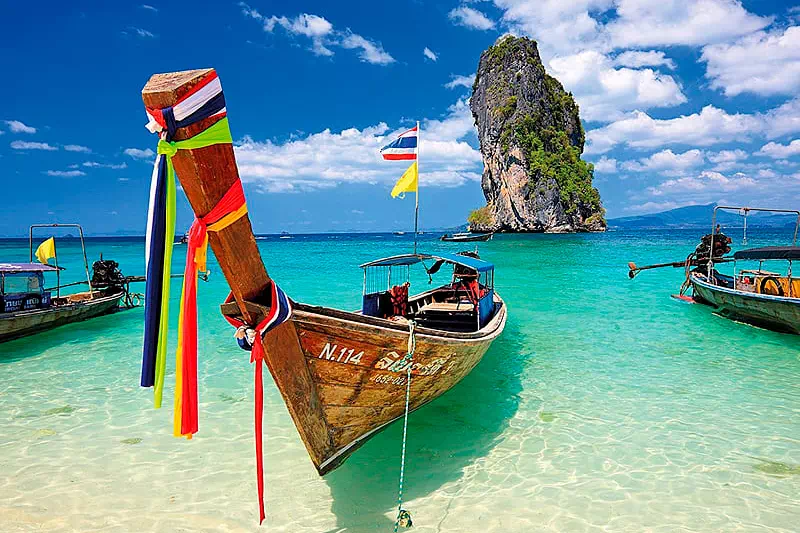
Families with young children and people who get seasick should aim for the dry season if they can. The difference between a flat sea and a choppy one matters most on long speedboat runs, and least on short hops near the coast.
Krabi has two real seasons and two transition periods. The table gives the general picture, but weather is weather: always check the forecast for the week you travel.
| Months | Weather | Sea | Crowds | Trips that work best |
|---|---|---|---|---|
| November | Rain easing, more sunny days | Calming down, some swell early in the month | Picking up | 4 Islands, Hong Islands, inland trips |
| December to February | Dry, sunny, pleasant evenings | Calm and clear | Highest | Every island tour, Phi Phi, Similan |
| March to April | Hot and dry, very strong sun | Usually flat and very clear | Busy, easing in late April | Similan, Phi Phi, snorkelling trips |
| May | Hot, first heavy showers | Can change quickly | Quieter | Short island trips, inland tours |
| June to August | Showers in bursts, many dry hours | Choppy on windy days, calm on others | Moderate, busier in July and August | 4 Islands, Hong Islands, kayaking, rafting |
| September to October | Usually the wettest months | Rougher, more cancelled days | Lowest | Emerald Pool, kayaking, elephants, rafting |
The transition months, May and November, are the least predictable: one week can feel like high season and the next like the monsoon. If you travel then, keep two or three days free for the boat trips you care about most.
A few notes on the table. July and August are busier than you might expect because of European summer holidays, even though it is the rainy season. And March and April feel very hot on land, so plan sightseeing for the morning and the water for midday.
Songkran, the Thai New Year water festival in mid April, is a fun time to be in Krabi Town and Ao Nang. Expect to get soaked in the streets and keep your phone in a dry bag.
The rainy season in Krabi, roughly May to October, is not constant rain. Most days have a heavy shower or two and plenty of dry hours, and boat trips still run on most days.
A typical low season day might start bright, cloud over after lunch, rain hard for an hour and clear again by evening. Some days are grey and drizzly from morning to night. Every few weeks a stormy spell can bring several bad days in a row, with strong wind and big waves.
The real issue is the sea, not the rain. The southwest monsoon pushes swell onto the Andaman coast, so open-water crossings get bumpy. Speedboats feel this most, and the long runs to Phi Phi or the Similan Islands are the first to be cancelled when it is rough.

There are real advantages too. Hotels are cheaper and quieter, the jungle is deep green, the waterfalls are full, and popular viewpoints are not packed. Many people who live here like the rainy months best.
The rule to remember: the decision to sail is made by the boat operator on the day, for safety. Tour programs can change with the weather without prior notice, so keep your plans flexible and do not book your one big island trip on your last day.
The big seasonal closure is the Similan Islands, which shut every year in the low season. The Similan national park is usually closed from mid-May to mid-October, so the Similan tour is only possible in the high season.
The Similan Islands snorkel tour by speedboat from Krabi is a long day, about 11 hours, and starts from ฿3090. It is worth it for clear water, granite boulders and some of the best snorkelling on the Andaman coast, but only when the sea is calm. The exact park opening dates can shift a little each year, so check before you plan around them.

Other changes are smaller but worth knowing:
If you only have a few days and your heart is set on Phi Phi, the Similans or a long speedboat day, travel between December and April. If you just want a taste of island life, the low season still gives you that.
From December to April, everything runs, so choose by what you want to see. The longest trips make the most sense now, because calm water turns a bumpy ride into an easy one.
The Similan Islands are the top pick for snorkellers. Phi Phi is the classic: the speedboat day from Krabi starts from ฿1890 and covers the famous bays and beaches. The Hong Islands speedboat tour, from ฿1690, is a calmer, greener day with a lagoon and a viewpoint, and it is a good choice for people who find Phi Phi too busy.
For a slower day, the 4 Islands by longtail from ฿1290 is the easy classic, with Phra Nang Beach, the Tub Island sandbar at low tide and snorkelling around Chicken Island. The blog article on the best island tour from Krabi compares them side by side.
If you want the long, clear-water days that are only at their best in the dry season, these three are the ones to plan around: the Similans for serious snorkellers, Phi Phi for first-timers who want the famous views, and the Hong Islands for a quieter day.
One honest tip for the high season: book the popular tours a few days ahead, especially around the holidays. Seats on the best days do fill up.
In the low season, the best trips are the ones that do not depend on open sea. Inland and sheltered trips almost never get cancelled for weather, and some are even better after rain.
The Emerald Pool and Hot Springs tour is the classic rainy day choice. It is a jungle day with a swim in a clear forest pool, a soak in warm spring water and a temple stop, and the Emerald Pool, Hot Springs and Tiger Cave tour starts from ฿1390. A grey day is actually pleasant in the forest, because the shade and the cloud keep the heat down.

Kayaking at Ban Bor Thor is another good low season option. You paddle through calm mangrove channels and sea caves, sheltered from the open swell, and the Bor Thor kayaking tour runs as a full day from ฿1790.
White water rafting on the Songprak River is the one trip where rain helps, as a fuller river makes the rapids more fun. The elephant sanctuary half day also works in any weather, and getting wet is part of it anyway.

For a rainy week, these three are the ones I would keep in my back pocket: the Emerald Pool for a gentle jungle day, Bor Thor kayaking for people who want to be active on calm water, and rafting for anyone who wants an adrenaline day.
A smart low season plan is to pencil in one island trip and one inland trip, then swap the days depending on the forecast. Most of the time you will get both.
March to May is the hottest part of the year in Krabi, but it is still a great time for sea trips. The sea is usually at its calmest and clearest in March and April, so the boat days are often the best of the year.
The problem is on land. Long climbs, temple stairs and midday walks become hard work, and the sun is fierce on the water too. Plan anything active for early morning and spend the hottest hours in the sea or in the shade.
Rock climbing at Railay is popular all year, but the best climbing conditions are in the dry months, when the rock is dry. In the heat, morning sessions are much more pleasant. Rafting in the dry, hot months can have less water in the river, so ask about conditions before you book.

A few things that help in the hot months:
Start with what matters most to you, then pick the season. If you want calm seas and every tour on the menu, come between December and April. If you want lower prices and quiet beaches and can live with some rain, the low season is good value.
Whatever month you choose, leave at least one flexible day in your plan and put the long boat trip early in your stay, so there is room to move it if the sea is rough.
A simple order that works in any season:
Remember that Railay is reached only by boat, so even a simple beach day there depends a little on the sea. In the low season the longtail crossing from Ao Nang can be wet and bumpy, and on the roughest days it may pause for a while. Tour prices are per person, and you can see all the options on the Go Krabi Tours home page.
And when the longtail driver shrugs and says the sea is fine today, trust him. That is usually the best forecast you will get.
The low season, roughly May to October, is the cheapest time for hotels, and September and October are usually the quietest months of all. Tour prices stay the same, but you get emptier beaches. The trade-off is more rain and some cancelled boat days.
Usually not. Most days have one or two heavy showers and plenty of dry hours, often with sunshine in the morning. Some stormy spells can bring several wet days in a row, so keep your plans flexible.
No. The Similan national park is usually closed from mid-May to mid-October every year. The Similan tour from Krabi only runs in the high season, when the sea is calm.
It can be, if you want quiet and low prices and do not mind rain. September is usually one of the wettest months, so plan inland trips like the Emerald Pool tour or Bor Thor kayaking, and treat any island trip as a bonus.
The Gulf islands have a different rainy season, with the heaviest rain usually later in the year, around October to December. So in June to September the Gulf side is often drier than Krabi. In January to April, Krabi and the Andaman coast are at their best.
Usually from December to April, with March and April often the calmest and clearest. The water is warm all year, but visibility is best when the sea is flat and there has been no heavy rain.
In the dry season, cancellations are rare. In the rainy season, the operator may cancel or change the route on rough days for safety, most often on long speedboat trips. Short trips like the 4 Islands run on most days.
Hotel pickup, insurance and a licensed local operator. Ask us anything on WhatsApp before you book.
Updated 3 November 2026.


