whatsapp, telegram +66-957-269-990
- info@gokrabitours.com


An honest guide to every way of moving around Krabi, what each one is good for and when to skip it. You also get straight advice on scooters and the boats to Railay, Phi Phi and Lanta.

It is 18:00 in Ao Nang, the beach has gone pink, and you want dinner in Krabi Town without paying for a car you do not need. Getting around Krabi is mostly about knowing which of its half-dozen options works at this hour and from this spot. Once you know that, the province is easy, and you will stop overpaying within a day or two.
There is no single best way. Use songthaews for cheap hops between Ao Nang and Krabi Town, taxis or an app for evenings and bags, and longtails for anything with water in the way. A scooter only makes sense if you are licensed and already confident on two wheels.
Krabi is spread out, and that surprises people. Ao Nang, Krabi Town, Klong Muang and Railay feel close on the map, yet each is its own little world, separated by road, cliffs or sea. Walking works inside Ao Nang or inside town, and almost nowhere else.
Here is how the options compare in practice. I have left out numbers on purpose, because fares move with season, fuel and the mood of the driver.
| Option | Best for | Cost feel | Main downside |
|---|---|---|---|
| Songthaew | Ao Nang to Krabi Town, short daytime hops | Cheap | Few services in the evening, can be slow |
| Taxi | Airport runs, bags, late nights | Fairly expensive | Agree the price first, not all use a meter |
| Ride-hailing app | Fixed price with no haggling | Medium | Few drivers in quiet areas, patchy pickup rules |
| Scooter | Freedom on quiet days | Cheap to rent | Crash risk, licence and insurance problems |
| Longtail | Railay and nearby islands | Fair | Waits to fill, wet landings, weather |
| Ferry | Phi Phi, Koh Lanta | Fair | Set timetable, rough sea in the wet season |
My general rule: spend your first day on songthaews and your feet. By the evening you will know what you really need, and most people find it is much less than they feared.
A songthaew is a pickup truck with two benches in the back, and it runs like a slow shared bus. You wave one down on the road, ride along the route, and press the buzzer or knock when you want to get off.
The route visitors use most is the one between Ao Nang and Krabi Town, and it is the best value transport in the province. Trucks are usually marked by colour or sign, though it pays to ask the driver "Krabi Town?" before you climb in, since a few branch off to other places.
You pay at the end, through the window at the cab, and small notes make life easy. Ask a local or your hotel what the fare should be, then hand it over with no discussion. Most drivers are honest, but tourists holding a big note and looking unsure do get charged more.
The catch is time. Trucks stop to fill up, they wander, and they thin out as the evening comes on. Do not plan a dinner in town and assume a songthaew home at 22:00: ask when the last one runs, and keep money for a taxi in case you miss it.
Comfort is what it is. On a hot afternoon with a full truck and luggage at your knees, you will start to think fondly of air conditioning. With big suitcases, skip it and take a car.
Yes, for evenings, for airport runs and whenever you have bags or children with you. Taxis cost several times what a songthaew costs, but they leave when you want and go to your door.
Most taxis here work on an agreed price, not a meter. Ask the fare before the car moves, and if it sounds high, simply ask the next driver. Hotels will usually call a car and tell you the going rate, which saves a lot of bargaining.
The big South-East Asian ride-hailing app, the green one most travellers in the region already have on their phone, works around Krabi. You see a fixed price before you book, which ends the haggling. Install it and set up your payment before you arrive, because that step can be awkward on hotel wifi.
Now the honest part. App coverage is good around Ao Nang and Krabi Town, thinner elsewhere, and quiet places may have no driver at all. Some spots, particularly around taxi ranks, are touchy about app pickups, so walk a little way off rather than start an argument for your driver.
The airport gets its own guide soon, so I will keep this brief. Prebook a ride or use the official counters at arrivals, and do not wander off with whoever approaches you first in the hall.
Only if you already ride well, you hold the right licence, and your travel insurance covers it. If any of those three is missing, skip the scooter. This is the single choice in this article that can properly hurt you.

Start with the legal side. To ride in Thailand you need a motorcycle licence, and for visitors that normally means your licence from home plus an international permit that includes the motorcycle category. A car-only licence does not count. Police checkpoints are common in tourist areas, and rental shops rarely check for you.
The bigger problem is insurance: ride without the right licence and most travel policies will not pay after a crash. Read yours for the small print on engine size and licences before you hire anything. Hospital bills after a bad accident are the kind of expense that ruins far more than a holiday.
Then there is the road itself. Highway traffic between Krabi Town and Ao Nang moves fast, and trucks and pickups do not make much room. Sudden rain makes the surface slick, sand gathers on corners near the beach, and dogs step out without warning. Night riding after a few beers is how the worst stories start.
If you do rent, follow this list:
Is it worth it at all? For a confident rider on a quiet morning, the back roads around limestone hills are lovely. For a nervous first-timer who wants to learn on holiday, no: go to the jungle pools on a tour and keep your skin. The Emerald Pool and Hot Springs day tour starts from ฿1390 and gets you there with no highway riding at all.
You take a longtail boat, because Railay is reached only by boat: no road goes there, despite it being on the mainland. The usual departure points are Ao Nang beach and Ao Nam Mao, with boats from Krabi Town as well.
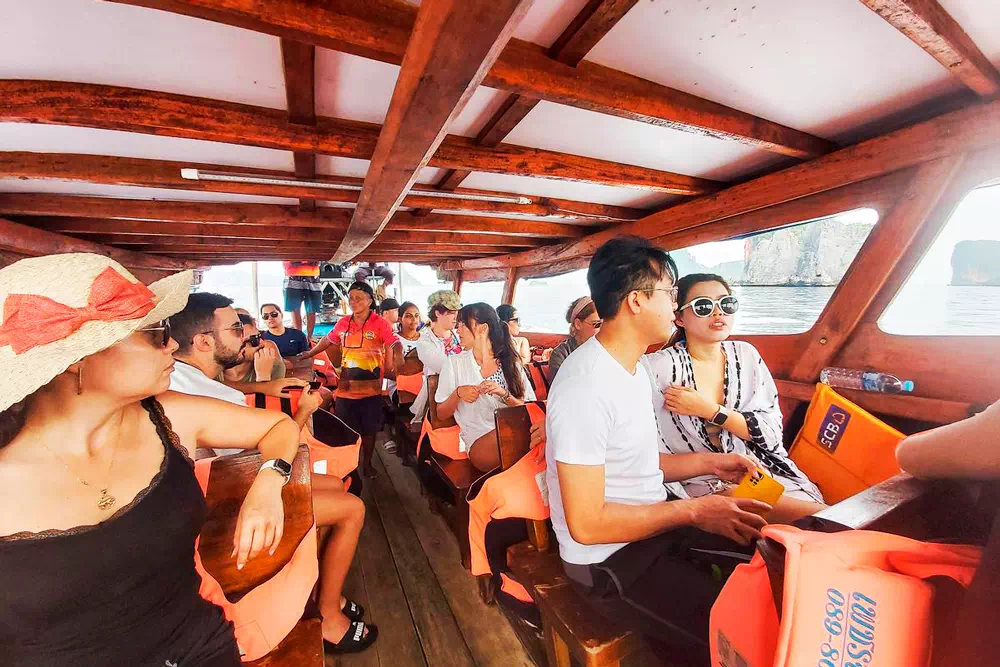
Boats usually wait until they have enough passengers, then leave. So you buy a ticket at the booth or the beach, wait a while, and share with strangers. Fares change, so check on the day. If you are in a hurry, or the beach is quiet, you can pay to charter the boat for your own group.
Expect to get your feet wet, because there is often no pier. You wade through the shallows with your bags above your head, and at low tide the boats may stop some way out. Wear sandals, put your phone in a dry bag and keep luggage small: a wheeled case on Railay's sand is a sad sight.

Watch the clock on the way back. Regular boats tail off towards dark, and the last one is not something you want to guess at. For everything else about that peninsula, from the beaches to the walk between them, read the Railay Beach guide.
In the wet season, the sea on the Ao Nang side can get rough enough to stop or limit the boats. Boats from Ao Nam Mao are often the fallback since that bay is more sheltered, but this varies, so ask at the booth rather than trusting an old post online.
For the nearby islands, a shared tour is normally much better value than hiring your own longtail. A private boat makes sense for a big family or for a group who hate fixed schedules, and the private longtail charter runs from ฿6900 for up to 8 guests over 4 hours.
Ferries to Phi Phi leave from the passenger pier just outside Krabi Town, and some services also run from the Ao Nang side in season. Koh Lanta has boats in high season and a road route with minivans all year, and the road is what most people use when the boats stop.
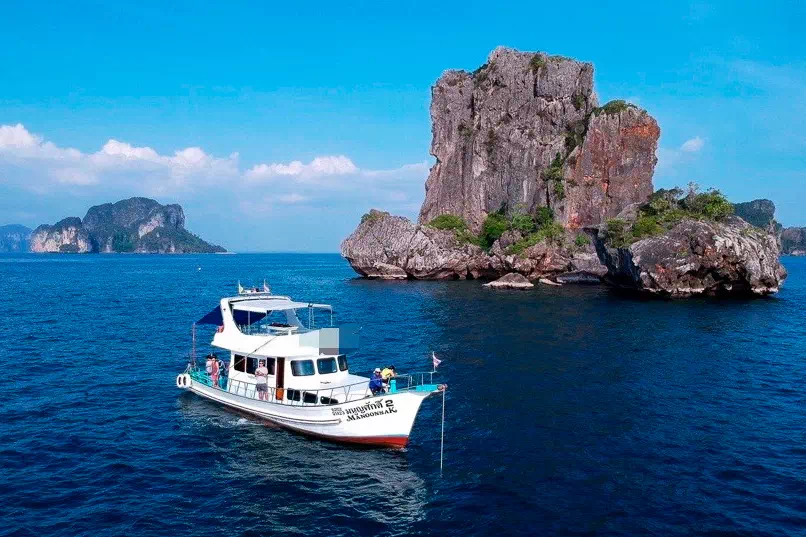
Timetables here change by season, sometimes at short notice, so treat anything you read online as a starting point. Confirm the ferry at your hotel or the pier a day or two before you travel. In the wet season the sea can be rough and sailings can be reduced or dropped, particularly on the Lanta side.
Book the transfer along with the ticket if you can, since the pier sits a drive away from Ao Nang. Arrive early with your passport handy, keep a bag with water and any seasickness pills close to you rather than down in the luggage pile, and expect a bit of chaos at boarding.
Should you go to Phi Phi by ferry or by tour? Go by ferry if you want to stay on the island for a night or two. For a single day, a ferry leaves you stuck at one pier with a timetable, while a speedboat tour reaches the bays. See the honest view on the Phi Phi day trip from Krabi.
Lanta is not a day trip in my book. It is a place to move to for a few days, with its own long beaches and a slower pace, and the drive or crossing eats too many hours to come back the same evening.
No. Most tours include hotel pickup and drop-off, so on a tour day you do not need a scooter, a taxi or a plan. A transfer collects you, the exact meeting time is confirmed after booking, and at the end of the day you are driven back.

This matters more than people expect, since early starts and far-off piers are where independent plans fall apart. A speedboat from a pier you have never seen, at an hour when songthaews are barely moving, is not something you want to solve on your own.
It can also replace a scooter day entirely. Tours like the 4 Islands by longtail from ฿1290 include your transfer, and the park fee is paid separately. Do remember to check where the pickup zone ends if you are staying somewhere remote, and mention your hotel when you book.
For a first trip, the 4 Islands by longtail suits people who want the classic boat and a lower price, the speedboat version suits those who prefer a quicker ride, and the Phi Phi day trip suits anyone happy with a long day out for the famous bays.
A handful of small things will save you more money and stress than any single transport choice. None of them is complicated, and they apply in Ao Nang, in town and on the piers alike.
Questions about pickup for your hotel are easy to sort out: send one on WhatsApp or through the booking request on any tour page, and name your hotel so the answer fits your stay.
Not by road, because Railay is reached only by boat. You take a longtail from Ao Nang beach or Ao Nam Mao. Boats leave once they have enough passengers, so allow some waiting time, and check the last boat back on the day.
They run into the evening, but they thin out as it gets later, and the last time varies. Ask a driver or your hotel when the last truck runs, and keep enough cash for a taxi back. Late at night, assume you will need a car.
No. You need a licence that covers motorcycles, and for most visitors that means a home licence plus an international permit including the motorcycle category. Without it you may be fined at a checkpoint, and most travel insurance will not pay after an accident. Check your own policy before you ride.
Yes, in most tourist areas and at the airport, and a car is a sensible, safer choice for families or for a few days of exploring. Traffic drives on the left, and a licence plus international permit is the normal requirement. Parking is simple outside the busiest part of Ao Nang.
The cheap option is the songthaew, which runs along this route during the day. For evenings or with bags, a taxi or ride-hailing app is easier. Ask your hotel for the current fare so you know what is fair before you go.
Local buses are limited and mainly serve the longer routes across the province. For visitors, songthaews and minivans do most of the work, while long-distance buses leave from the bus terminal outside Krabi Town. Check times on the day, because schedules can change.
You can hire a longtail, but it usually costs far more than joining a shared tour unless your group is large. The boat also needs to wait for you and the park fee still applies. For most people a day tour with hotel pickup is simpler and much better value.
Hotel pickup, insurance and a licensed local operator. Ask us anything on WhatsApp before you book.
Updated 21 November 2026.