whatsapp, telegram +66-957-269-990
- info@gokrabitours.com


James Bond Island itself takes about ten minutes to see. The real reason to book a james bond island tour from krabi is the three hour run through Phang Nga Bay to get there and back.

The boat slows down in front of a narrow limestone pillar leaning out of green water, cameras come out, everyone gets their ten seconds of the view from the film, and then the boat moves on. That is James Bond Island in one sentence. Coming from Krabi rather than Phuket changes the shape of the whole day, because you are crossing Phang Nga Bay from the other side, and that crossing is where most of the good stuff actually happens.
A lot of people book this thinking the island is the destination. It is a stop. A short, busy, slightly touristy stop with a souvenir market and a lot of other boats. The bay around it, the caves, the floating village, the limestone walls rising straight out of flat water, that is what you are actually paying for. Once you know that going in, the day makes a lot more sense and you stop waiting for the island to deliver something it was never going to.
A full day james bond island tour from krabi runs around 8 hours and combines a boat trip through Phang Nga Bay with a cave temple, a floating fishing village, and usually some kayaking. The exact mix of stops is what separates this trip from the closer island tours around Krabi, which stay in the Ao Nang and Railay cluster and never cross into Phang Nga Bay at all.
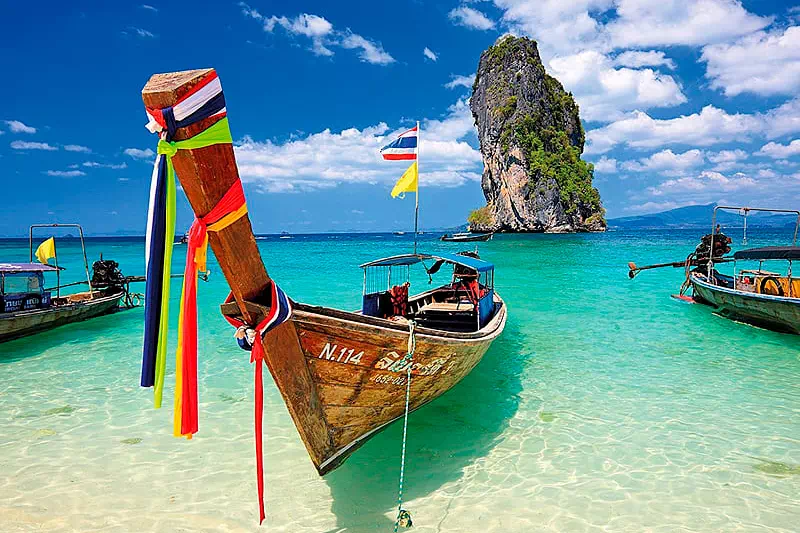
The James Bond Island tour by longtail from Krabi and the James Bond Island tour by speedboat from Krabi cover broadly the same route: James Bond Island (Koh Ping Kan), Koh Panyee for lunch, Wat Suwan Kuha cave temple, and kayaking around the mangroves. The speedboat version gets you there faster and usually fits a bit more into the day, the longtail version is slower and a little more old-school, with the wind in your face and no engine roar drowning out conversation.
Both are run by local operators licensed to work the bay, and both include hotel transfer, a guide, lunch, soft drinks and fruit, and the kayaking equipment. Neither includes the national park entrance fee, which is charged separately and in general terms is a modest add-on rather than a trip-changer. If someone in your group has a heart condition or is pregnant, note that this tour is not set up for them, the same as most of the boat-based Krabi tours.

Yes, but mainly for the bay scenery around it, not for the island itself. James Bond Island, officially Koh Ping Kan, is a tall thin karst outcrop next to a slightly larger island with a beach, souvenir stalls and a lot of foot traffic.
It became famous after a few scenes of "The Man with the Golden Gun" were filmed there in the 1970s, and that fame has never really faded. The result is that on a normal day you will share the little beach with several boatloads of other visitors, local vendors selling shells and snacks, and a steady rotation of people lining up for the same photo angle. It is not a quiet spot, and it is not a long stop either, usually just long enough to walk around, take photos, and maybe buy something from the market before heading back to the boat.
What makes the day worthwhile is everything around it. Phang Nga Bay is full of karst towers rising straight out of flat, often glassy water, with sea caves cutting through some of them and mangrove channels threading behind others. The scenery during the crossing and around the smaller islets is usually more memorable than the headline stop itself, so if your expectations are set on "famous rock formation plus a genuinely striking bay," you will leave satisfied. If you are expecting a beach day with swimming and snorkeling, this is the wrong tour, book a 4 Islands or Hong Islands trip instead for that.
Koh Panyee is a fishing village built almost entirely on stilts over the water, home to a Muslim community that has lived there for generations. Lunch is served here on most James Bond Island itineraries, usually seafood or a Thai set menu, in a restaurant built out over the bay on the same stilts as the houses.
Walking through the narrow walkways between houses, past the school, the small shops and the mosque, gives a sense of a working village rather than a staged tourist attraction, even though tour groups are clearly a big part of the local economy now. Boats, fishing nets and motorbikes (yes, motorbikes, on a village with no roads) share the same boardwalks as pedestrians, so it pays to walk with some awareness rather than wandering with your camera up the whole time.

A few practical notes on the village stop:
Wat Suwan Kuha, sometimes called the Monkey Cave Temple, is a cave shrine built around a large reclining Buddha statue, with high natural ceilings and smaller altars tucked into the rock. It sits on the mainland side of the route, usually visited on the way to or from the boat pier rather than by water.
Inside, the air is noticeably cooler than outside, and the scale of the cave itself, with light filtering down from openings in the rock above, tends to surprise people who were expecting a small roadside shrine. The reclining Buddha is large, gilded, and genuinely a striking sight against the raw limestone around it. Smaller stupas and Buddha images are scattered through side chambers, and some of the temple grounds outside are home to the macaques the "Monkey Cave" nickname refers to.
A word of caution about those macaques: they are used to tourists and will go for food, bags, and anything that looks like a snack. Keep food out of sight, do not make eye contact or smile at them (showing teeth reads as aggression to a macaque), and hold onto bags and anything dangling, like camera straps or sunglasses. Staff on site are generally used to managing this, but it is still worth being alert rather than treating the monkeys like a petting zoo.

The speedboat tour gets you across the bay faster, which usually means more time at each stop and a day that feels less rushed overall. The main trade-off is price and feel: the speedboat version from ฿2290 costs more than the longtail version from ฿1890, and a longtail ride through the bay is quieter, slower and arguably more atmospheric.
If you are short on time, prone to seasickness on a bouncier ride, or just want to maximise time at the stops rather than in transit, the speedboat makes sense. If you have a full day free, want a more relaxed pace, and like the idea of a traditional wooden boat gliding past karst cliffs rather than powering across them, the longtail is the better match, and it is also the gentler option for families with young kids who find speedboats jarring.
| Longtail tour | Speedboat tour | |
|---|---|---|
| Adult price | From ฿1890 | From ฿2290 |
| Duration | 8 hours | 8 hours |
| Pace | Slower, quieter crossing | Faster transfers, more time at stops |
| Best for | Relaxed pace, photography, families with young kids | Shorter attention spans, rougher seas, time-conscious travellers |
Neither tour includes the national park entrance fee, and both include kayaking around the mangroves and limestone, weather and tide permitting. If the kayaking is cancelled on the day because of conditions, it is usually swapped for extra time at one of the other stops rather than simply dropped with no replacement, but always confirm with whoever books your tour if this detail matters to you.
Expect a long day on the water with a mix of boat time, walking, and a short kayaking session, so dress for heat and sun rather than for swimming. There is no dedicated snorkeling stop on this itinerary, which surprises some people who assume every Krabi boat tour includes time in the water.

If swimming and snorkeling matter more to you than the Bond connection and the cave temple, a 4 Islands or Hong Islands day will give you far more water time for a similar or lower price. James Bond Island is a sightseeing and culture day with some paddling, not a beach day.
For readers comparing this against the closer tours, the earlier guides on 4 Islands Tour Krabi: Longtail or Speedboat and Hong Islands Tour from Krabi cover the swimming-focused alternatives in detail, both of which stay closer to Krabi and spend most of the day in the water rather than crossing the bay.
Book this if you want to see Phang Nga Bay's limestone scenery, learn a bit about the Bond film connection, walk through a genuine stilt village, and visit one of the more impressive cave temples in the region, all without the swimming focus of the island-hopping tours. It suits travellers who have already done a beach-and-snorkel day and want something with more cultural variety, and families traveling with older kids who will appreciate the Bond trivia and the cave.
Skip it if beach time and snorkeling are the priority, if you only have one full day in Krabi and have to pick a single tour (the 4 Islands or Hong Islands trips give more time in the water for a shorter, usually cheaper day), or if anyone in the group gets seriously seasick on longer crossings, since this route involves more open water time than the shorter island tours. If you are weighing this against Phi Phi, the separate guide on Phi Phi Day Trip from Krabi covers that comparison from the other direction.
One honest note: James Bond Island is genuinely more associated with Phuket in a lot of travel content, since it sits roughly between the two provinces and plenty of Phuket-based boats run the same route. Doing it from Krabi works just as well and usually means a shorter road transfer before the boat, but do not expect the island itself to feel less crowded just because you came from the other side of the bay.
It depends on which pier the tour departs from and which boat type you choose, with the speedboat crossing taking noticeably less time than the longtail. Both tours are built around a full day, roughly 8 hours door to door, so the transit time is already factored into the schedule.
There is no real swimming beach at the main stop, and this itinerary is not built around water time the way the 4 Islands or Hong Islands tours are. The kayaking segment is the closest thing to water activity on this route.
Both sides reach the same island and bay, so it comes down to where you are staying. From Krabi the road transfer to the pier is generally shorter, which means less time on a minivan and more time on the water.
No, children aged 3 to 11 pay a reduced rate and children up to 3 years old go free, on both the longtail and speedboat versions. Check the current child pricing on the tour page before booking.
No, the entrance fee for the national park area is charged separately from the tour price itself. It is collected in general terms as a standard add-on on the day, so budget a small amount extra beyond the quoted tour price.
Modest clothing that covers shoulders and knees is appropriate at both the cave temple and the floating village, since it is an active religious site and a residential community rather than a resort stop. A light cover-up over swimwear works fine if you forget to change beforehand.
It involves a longer open-water crossing than the shorter Krabi island tours, so anyone prone to seasickness should take precautions before boarding rather than after symptoms start. The speedboat version is faster but can feel bouncier in choppy conditions, while the longtail is slower and generally steadier.
Yes, most visitors spread it across a different day from their beach or snorkeling tour rather than trying to combine them, since both are full 8 hour days. Pairing it with a 4 Islands or Hong Islands day earlier or later in the trip gives a good mix of culture and beach time without overloading a single day.
Hotel pickup, insurance and a licensed local operator. Ask us anything on WhatsApp before you book.
Updated 22 October 2026.