whatsapp, telegram +66-957-269-990
- info@gokrabitours.com


Standing on the pier at 8am, you have two boats to choose from and one decision that shapes your whole day: a wooden longtail with a put-put engine, or a speedboat that gets you there in a fraction of the time. Here's what actually changes between the two, beach by beach.
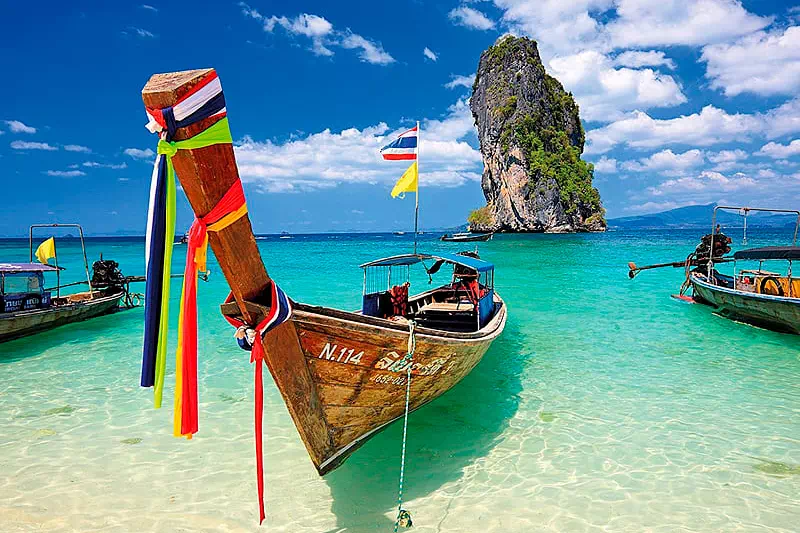
Everyone who books a 4 islands tour krabi longtail or speedboat question eventually asks the same thing on WhatsApp: which boat should I pick? Both tours visit the same four stops: Railay's Pra Nang Beach, Tub Island, Chicken Island and Poda Island. The difference is how you get between them, and that changes more about your day than people expect.
The route and islands are identical. What changes is the engine, the ride, the price and how many minutes you spend getting from one island to the next instead of swimming.
A traditional longtail boat is the wooden, narrow-hulled boat you see painted with colorful ribbons at every pier in Krabi. It's powered by a long propeller shaft off a car or truck engine, sits low in the water, and moves at a fraction of the speed of a modern speedboat. A speedboat is a fibreglass hull with twin outboard engines, built for speed and a smoother ride in choppier water.
On the 4 Islands tour by longtail, you'll feel every wave. On the 4 Islands tour by speedboat, transfers between islands are short enough that you barely notice them.
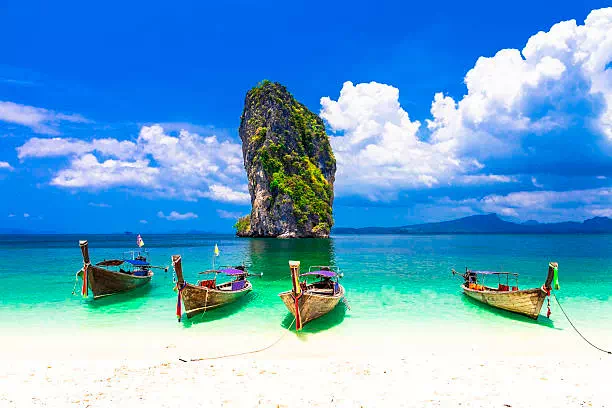
With a speedboat, you get more net time in the water and on the sand because less of your day disappears into transit. A longtail covers the same four stops but takes longer between each one, so the day feels fuller of boat time and lighter on beach time.
Neither tour publishes a stop-by-stop clock, and in practice it depends on the tide, the number of boats at each island that morning, and how much time the group is given to linger. But the physics are simple: a speedboat doing 30-40 knots covers a transfer that might take a longtail three or four times as long.
If your priority is maximum time floating over the reef at Chicken Island or stretched out on Poda's sand, that favours the speedboat. If you don't mind less beach time in exchange for a more relaxed, scenic ride, the longtail works fine, especially since both tours run the same 7-hour window (08:30 to 15:30).
The speedboat is the more comfortable ride for most people: higher off the water, faster through chop, less rocking side to side at anchor. The longtail is the bumpier, wetter, noisier option, but also the more atmospheric one.
Longtails sit close to the waterline, so spray comes over the side more easily, especially if the sea has any wind chop that day (common from November through February). The engine noise means conversations happen mostly at each stop, not while moving.
Speedboats have a covered or semi-covered seating area, ride higher, and get you out of the sun and spray faster between stops. The trade-off is a harder, bouncier ride if the driver pushes speed through rougher water, which can bother some stomachs more than the gentle rock of a longtail.
This genuinely depends on the person. Some people feel worse on a speedboat's slap-slap-slap over chop; others feel worse on a longtail's slower, rolling motion.
The longtail wins for atmosphere shots: wooden hulls, ribbon decorations and limestone cliffs make a far better frame than a white fibreglass speedboat. For underwater and beach shots, it makes no difference since you're off the boat anyway.
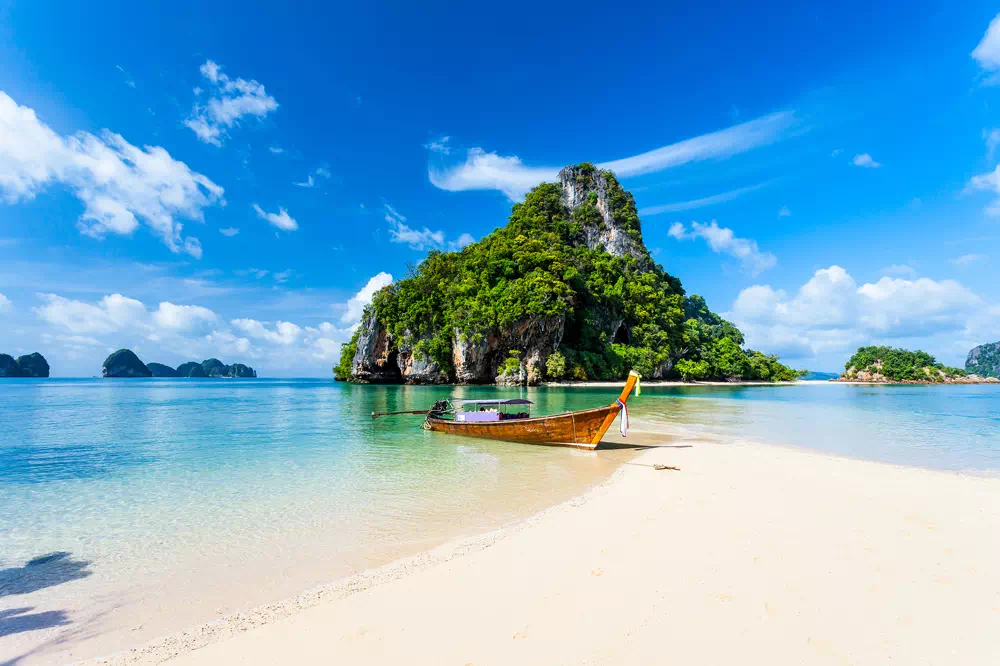
If you've seen the classic Krabi postcard shot (a longtail beached on white sand with a karst tower behind it), that's only achievable if you're actually on a longtail tour. Speedboats are functional, not photogenic, though they do get you additional minutes on the islands themselves for photos there instead.
No, the crowd at Chicken Island or Poda is the same regardless of which boat brought you there. Both tour types converge on the same four stops, along with every other operator's longtails and speedboats, so you'll see both boat types moored side by side at each island.
What changes crowd experience more is what time of day you arrive, which depends partly on pickup time and partly on how many islands the tour visits before or after a given stop. A speedboat that reaches Poda early, before the midday rush of boats, will feel noticeably quieter than arriving at noon.
The longtail tour starts from ฿1290 for adults and the speedboat version from ฿1490, both for the same four islands and same inclusions (hotel transfer, snorkeling gear, life jacket, English-speaking guide, lunch, fruit and soft drinks). Neither price includes the national park entrance fee, which is paid in addition.
| Longtail 4 Islands | Speedboat 4 Islands | |
|---|---|---|
| Adult price | ฿1290 | ฿1490 |
| Child (3-11) price | ฿990 | ฿1190 |
| Duration | 7 hours (08:30-15:30) | 7 hours (08:30-15:30) |
| Ride comfort | Slower, wetter, more rock and sway | Faster, smoother, less transfer time |
| Atmosphere | Traditional, photogenic boat | Modern, functional |
The gap between the two is small enough that price alone shouldn't decide it for most travellers. It's really a question of what kind of day you want, not which one is the better deal.
Choose the longtail if you want the classic, unhurried version of the trip and don't mind trading some beach minutes for atmosphere. Choose the speedboat if your main goal is maximum swimming and beach time, you're short on patience for slow transfers, or you're prone to seasickness on rolling boats rather than fast ones.
If you want a similar route but with sunset, dinner and bioluminescent plankton instead of a midday swim, the 7 Islands Sunset Tour covers overlapping islands later in the day. For a quieter, more lagoon-focused day with fewer crowds than the 4 Islands route, the Hong Islands tour by longtail or its speedboat version are worth comparing before you book.
If you'd rather go further afield for a full-day sea adventure, the Phi Phi Islands day tour trades the shorter 4 Islands route for a longer trip with Maya Bay and Viking Cave in the mix.
A few practical points that make the choice easier on the day.
Yes, a speedboat covers the transfers between Railay, Tub, Chicken and Poda Island noticeably quicker than a longtail, since both tours run the same 7-hour window but the speedboat spends less of it in transit. That extra time usually goes toward more minutes swimming or relaxing on the beaches rather than a shorter overall day.
No, you book one tour or the other, and each uses its own boat type for the full day. If you want to try both experiences, you'd need to book them on separate days.
Both tour types run with life jackets and experienced local operators, but a speedboat generally handles chop more predictably while a longtail can feel more exposed in wind and swell. On days with rougher sea conditions, routes or timing may be adjusted for either boat, so check on the day if conditions look uncertain.
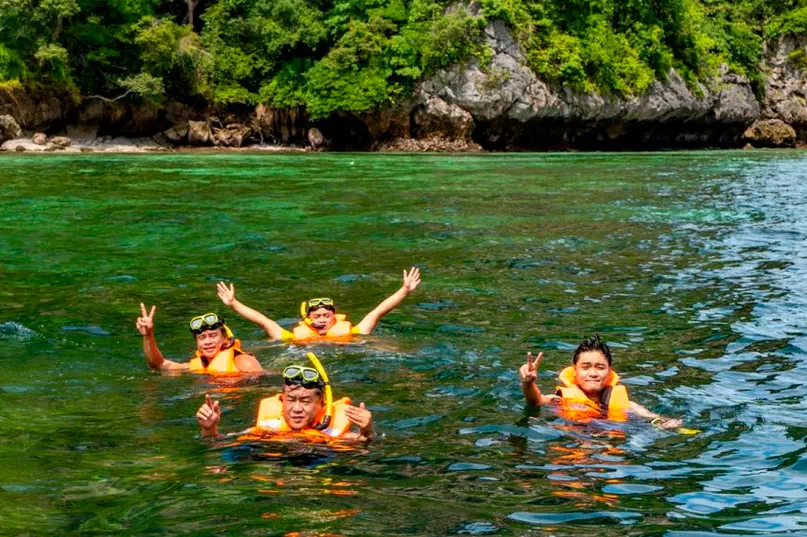
No, a life jacket is provided and snorkeling is done in shallow, calm areas close to the boat on both the longtail and speedboat tours. Non-swimmers can still enjoy the beaches and float with the jacket on.
Yes, both tours include lunch along with fresh fruit, soft drinks, snorkeling gear and an English-speaking guide. Hotel transfer is also included in both prices.
Yes, both tours accept children, with reduced pricing for ages 3 to 11 and free entry for children up to age 3. Families with toddlers may find the shorter transfer times on the speedboat easier to manage.
Railay is cut off from the mainland by limestone cliffs, so despite being part of the same peninsula area, it's only reachable by boat, which is why it's included as a stop on sea tours like this one. There's no road access, which is part of what keeps the beach feeling less built-up than Ao Nang.
During the windier months (roughly November to February), a longtail will feel the chop more than a speedboat, so if you're sensitive to a bumpy ride, that's worth factoring in during that period. In calmer months, the difference in ride comfort between the two is much smaller.
Hotel pickup, insurance and a licensed local operator. Ask us anything on WhatsApp before you book.
Updated 17 October 2026.