whatsapp, telegram +66-957-269-990
- info@gokrabitours.com


Everything you need for Railay Beach in Krabi: how the boats work, which side of the peninsula is which, what Phra Nang and the viewpoint trail are really like, and whether to visit for a day or stay the night.

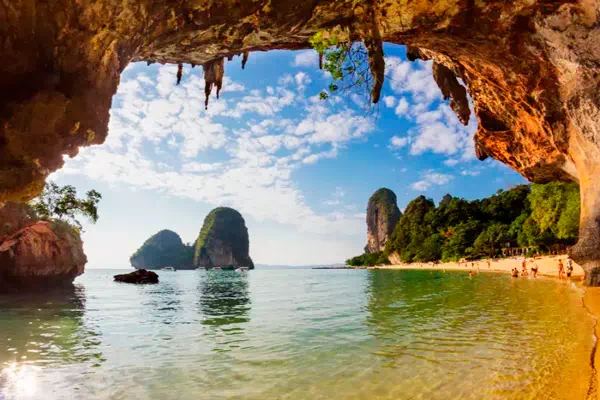
The longtail cuts its engine, the boatman points at the water and you realise there is no pier: you are going to jump into knee deep sea with your bag over your head. Ahead, a strip of pale sand sits under cliffs that look too big to be real. That is how most people meet Railay Beach in Krabi, and it is a good first impression to have.
This guide explains how the boats work, which beach is which, what the viewpoint trail and the climbing walls are like, and whether a day trip or a night on the peninsula makes more sense for you.
Railay is not an island, it is a small peninsula on the Krabi mainland, but steep limestone cliffs and jungle cut it off from the road network. There is no road in, so every visitor arrives by boat.

That isolation is the whole charm. There are no cars and no motorbike traffic on the beaches, only footpaths, small resorts, a handful of bars and the cliffs. It feels further away from Ao Nang than it really is.
It also has practical downsides. Everything on Railay arrives by boat, so food, drinks and rooms usually cost more than on the mainland. There are a few shops and cash machines, but I would bring enough cash rather than rely on them.
The key fact for planning is simple: no boat, no Railay. Rough sea, low tide or the last boat leaving early all affect your day, so build in some slack and do not plan a tight connection back to the airport.
From Ao Nang, shared longtail boats leave from the beach and drop you at West Railay. From Krabi Town, boats go to East Railay. Shared boats usually wait until enough passengers have bought tickets, so expect a short wait at quiet times.
The Ao Nang route is the easy one and the one most visitors use. The ride is short, you buy a ticket at the counter near the beach, and the boats run through the day. Ask about the time of the last boat back when you buy the ticket, and believe what they tell you.
The Krabi Town route is longer and less used, but it suits people staying in town. In the rainy season, when the sea off Ao Nang gets rough, boats sometimes use calmer routes to East Railay instead. Timetables and prices change, so check on the day.
There are three other ways in:
If you are four or more and want a relaxed day, a private longtail boat charter in Krabi takes up to 8 guests for 4 hours from ฿6900. You leave when you want and add quieter beaches to the trip.
West Railay is the postcard: a long sandy beach, calm swimming water in the dry season, cliffs at both ends and the sunset. East Railay faces mangroves and mudflats, it is not a swimming beach, and it is where the cheaper rooms, bars and the boats from Krabi Town are.

The two sides are joined by short footpaths through the middle of the peninsula, lined with resorts, cafes and small shops. You can walk from one side to the other in a few minutes, so where you sleep matters less than people think.
| Area | Best for | Swimming | Downsides |
|---|---|---|---|
| West Railay | Swimming, sunset, first visit | Good, sandy bottom | Busy with day boats around midday, higher prices |
| East Railay | Budget rooms, bars, boats from Krabi Town | Poor, mangroves and mud at low tide | No beach to speak of, livelier at night |
| Phra Nang Beach | The best scenery, Princess Cave, climbing | Very good at high tide | Crowded with tour boats in the middle of the day |
| Tonsai | Climbers, a simpler and quieter scene | Rocky at low tide | Basic facilities, reached on foot at low tide or by boat |
My honest view: sleep wherever suits your budget, but swim at West Railay and Phra Nang. Nobody comes to Railay for the beach on the east side, and you do not need to.
Tonsai, just around the headland from West Railay, is the climbers' corner. It is more basic, less polished and has its own crowd. Getting there on foot depends on the tide, so ask locally before you try it.
Phra Nang Beach is the small, cliff wrapped beach at the southern tip of the Railay peninsula, and yes, it is the most beautiful spot on Railay. Its sand, clear water and the Princess Cave at the foot of the cliff make it the place most photos of Krabi come from.

From East Railay, a shaded walkway runs along the base of the cliffs to Phra Nang. The walk is easy and you will often meet monkeys on the way. Keep food out of sight and hold on to your bags.
The Princess Cave is a small shrine in the rock, filled with carved wooden offerings left by fishermen asking for luck and safe seas. It surprises some visitors, so be respectful and do not climb on the offerings.
Phra Nang is also the first stop on the 4 Islands tour from Krabi, which is why it fills up with boats from late morning. To have it calmer, go early in the morning or late in the afternoon. I will cover the cave and beach in more detail in a separate guide.
The two big activities on Railay are the steep viewpoint and lagoon trail and rock climbing on the limestone walls. Both are best in the cool morning, and both need more energy than a beach day.
The viewpoint is worth it for fit people in proper shoes, and the lagoon is only for confident scramblers in dry weather. The trail starts on the path between East Railay and Phra Nang and goes almost straight up a muddy, rocky slope with fixed ropes.
The first part to the viewpoint is short but steep. You pull yourself up on ropes over red clay and roots, then reach a ridge with a view over East and West Railay. On a clear day it is one of the best views in Krabi.
The lagoon is a different matter. From the ridge, the route drops steeply into a hidden pool surrounded by cliffs, with several sections where you climb down on ropes. In the wet season, or after rain, it is slippery and genuinely risky.
Accidents here usually happen on the way down, not up. If you have small children, a bad knee or a fear of heights, enjoy Phra Nang beach instead. You are not missing as much as the internet suggests.
Yes, Railay is one of the most famous climbing areas in the world and also one of the best places to try climbing for the first time. The limestone walls rise straight from the sand, and there are easy routes for beginners next to hard routes for experts.

Walls are spread across the peninsula, around Phra Nang, Tonsai and East Railay. Climbing starts early, because many walls get full sun and become uncomfortable by midday, and some face the water so the views from the top are spectacular.
The rock climbing tour at Railay Beach starts from ฿1490 and comes as a half day or a full day, with transfer and an instructor. It is set up for beginners and families, so you do not need any experience or gear.
Climbing is the one thing on Railay you should book before you go, because it decides your morning. I will write a separate beginner guide, but if you are curious, a half day is enough to know if you like it.
This choice is simple: the climbing tour suits active people who want to try something new on Railay, and the private longtail suits families or groups who want Railay and the islands on their own schedule.
Tides on this coast are large, and they change Railay a lot. At high tide the beaches look full and blue; at low tide boats stop further out, East Railay becomes mudflats and the walk to Tonsai opens up over rocks.

For swimming, high tide is better at West Railay and Phra Nang. At low tide you may walk a long way over shallow sand and rocks before the water reaches your waist, and coral bits and sharp shells can hurt bare feet.
Boats are affected too. At low tide the boat may stop far from the sand and you wade further, and on the east side you may have to walk across a long stretch of mud. Check a tide table on your phone the day before.
The best plan for a day visit is to arrive before high tide and leave before the last boat. In the rainy season, add a margin for rough sea, because boats sometimes stop running in bad weather.
A day trip is enough to see the beaches, swim and walk to Phra Nang. Stay at least one night if you want to climb, do the viewpoint in the cool morning, or see Railay quiet after the day boats leave.
Evenings and early mornings are when Railay is at its best. The day visitors are gone, the light on the cliffs turns gold and you can have Phra Nang almost to yourself at sunrise. For many people, that alone is worth the extra effort.
The effort is real. You carry or drag your luggage through shallow water, rooms usually cost more than similar ones in Ao Nang, and the choice of food is smaller. If you like nightlife, shopping or lots of restaurants, stay in Ao Nang and visit.
Families with very small children often find a day visit easier. A good option is a tour where the boat does the work: the 4 Islands tour runs from 08:30 to 15:30, stops at Phra Nang, then continues to Tub, Chicken and Poda islands. You can read every stop in the 4 Islands tour itinerary.
Pack light and waterproof: a dry bag, reef shoes or sandals with grip, sunscreen, cash and water. Most problems on Railay come from getting off the boat with too much stuff or getting stuck after the last boat.
If you want Railay without organising boats yourself, the 4 Islands longtail tour starts from ฿1290 and the 4 Islands speedboat tour from ฿1490. Both include hotel transfer, lunch, snorkelling gear and a guide.
The longtail tour suits travellers on a budget who like the traditional boat, while the speedboat suits anyone who wants faster crossings and more time on the sand.
One last tip: do not try to do Railay, a climbing session and the viewpoint all in the afternoon heat. Pick one big thing, start early and leave the rest for the beach.
Yes, it is one of the most scenic places in Krabi thanks to the cliffs, Phra Nang Beach and the calm car free atmosphere. It does get busy in the middle of the day, so go early or stay overnight to enjoy it at its best.
The longtail ride from Ao Nang beach to West Railay is short and usually feels like a quick hop around the headland. Waiting for the boat to fill up can take longer than the ride itself at quiet times.
West Railay and Phra Nang are calm and good for swimming in the dry season. In the rainy months the sea can be rough, with waves and murkier water, so check conditions and swim only where it is safe.
Railay works well for a day with kids if you stick to West Railay and Phra Nang and skip the viewpoint trail. The wading on and off the boats is the trickiest part, so keep small children close and pack light.
There are a few small shops and cash machines, but prices are higher than on the mainland and machines can run empty. Bring enough cash for your day or stay.
Yes, depending on the tide you can walk over the rocks from West Railay at low tide, and there is also a jungle path. Ask locally about the route and the tide before you set off.
Wear shorts or swimwear and sandals you can get wet, because you usually step off the longtail into shallow water. Keep your phone and cash in a dry bag. Bring a light shirt for the sun on the ride back.
Hotel pickup, insurance and a licensed local operator. Ask us anything on WhatsApp before you book.
Updated 4 November 2026.