whatsapp, telegram +66-957-269-990
- info@gokrabitours.com


What a beginner climbing day at Railay really looks like, from the gear fitting to the first wall, plus honest advice on fitness, heat, fear of heights and whether to book the half or full day.
You are lying on the sand at Railay, looking up at the orange and grey limestone, and you notice tiny figures in helmets halfway up the wall. Half of you thinks "no way", the other half wants to know what it feels like up there. That is usually the moment people start looking up rock climbing in Krabi for beginners.
The answer is yes, and this guide walks you through the whole day: the boat over, the gear, the first route, how fit you need to be and what to do if your legs start shaking at five meters.
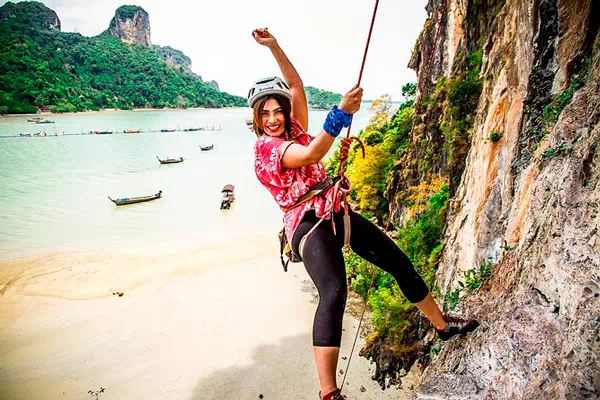
Yes. Rock climbing in Krabi is one of the best places in Thailand for beginners, because the walls at Railay have easy routes that start right from the sand and instructors set everything up for you. You do not need your own gear, a climbing course or any experience.
The limestone around Railay is full of pockets, ledges and edges, which means there is almost always somewhere to put your foot. That is exactly what a first-timer needs. Harder routes go up the same cliffs, so experienced climbers and beginners often share a wall.
The climbing tour includes climbing equipment, a safety technique briefing, accident insurance and an English-speaking guide, so you arrive with nothing but swimwear and sunscreen. That is the big difference from booking climbing on your own: you do not have to work out where to go or what to rent.
Who it is not for: people with heart or other serious medical conditions and pregnant women, who are not allowed to take part. If you have a back or shoulder injury, talk to the instructors before you climb and be honest about it.
A beginner day starts with a hotel pickup, a short longtail ride to Railay, gear fitting and then climbing on the beach cliffs from about 09:00. The half day ends at 13:00; the full day carries on after lunch with more climbing and a rappel from the viewpoint.
Railay is reached only by boat, even though it sits on the mainland, because the cliffs cut it off from the roads. The climbing day already includes the boat leg, so you do not need to sort out a longtail yourself.
| Time | What happens |
|---|---|
| 07:30 - 08:00 | Hotel pickup |
| 08:30 | Registration and gear fitting, then the longtail boat to Railay Beach |
| 09:00 | Rock climbing on the beach cliffs |
| 13:00 | Half day: back to the mainland and transfer to the hotel |
| 13:00 | Full day: lunch break |
| 14:00 | Full day: rock climbing and rappelling from the viewpoint on Railay Beach |
| 17:00 | Full day: transfer back to the hotel |
The exact pickup time is sent to you right after booking, so watch your messages the evening before. Be ready in the lobby a few minutes early; the boat leg is timed, and nobody enjoys a rushed harness fitting.
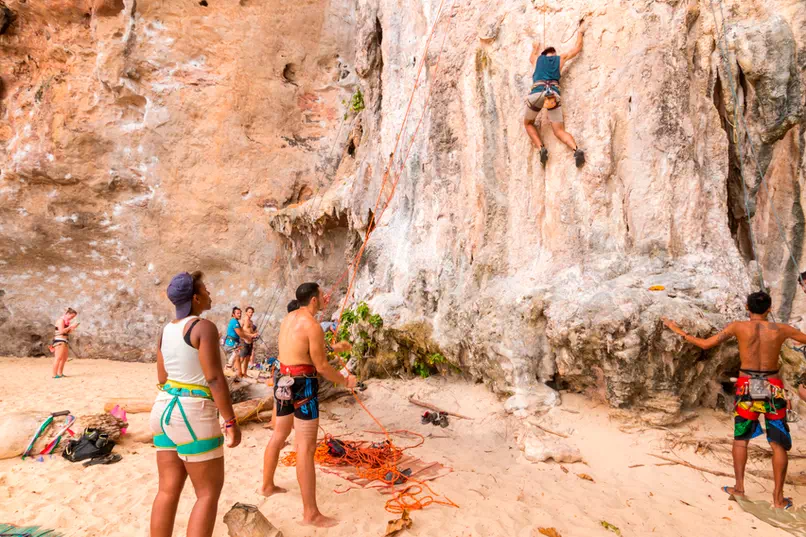
Between climbs there is plenty of waiting, and that is normal. One person climbs, another holds the rope, the rest rest in the shade, drink water and watch the technique of whoever is on the wall. Watching is half the learning on a first day.
You climb on a top rope: the rope runs from your harness up to a fixed anchor at the top of the route and back down to the person holding it. If you slip, you drop a short distance and hang on the rope; you do not fall to the ground.
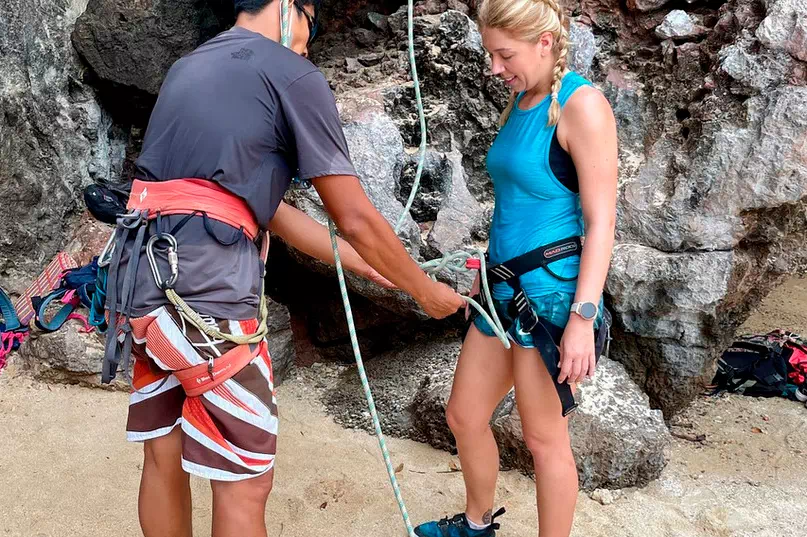
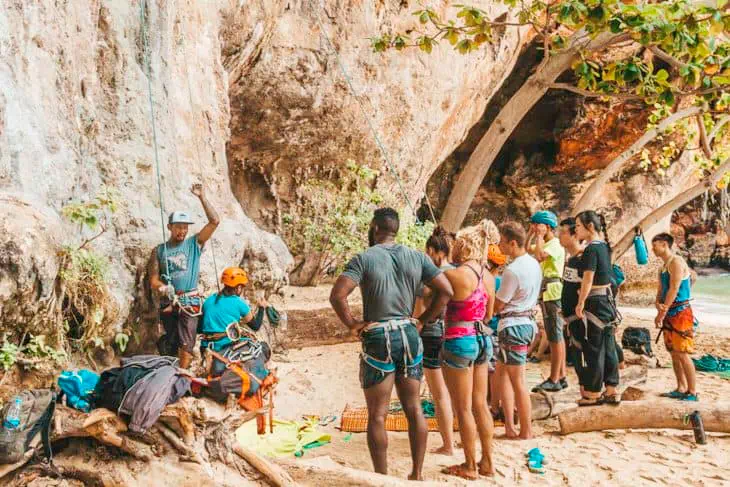
The day starts with a safety technique briefing. You learn how to put on the harness, how the knot attaches you to the rope, the few calls climbers use ("take", "slack", "lower") and how to sit back on the rope to come down. It sounds like a lot, but most people have it after ten minutes.
Before every climb your knot and harness should be checked by the instructor, and you should never skip that check. On a beginner day the instructors run the ropes and the anchors, so you can focus on your hands and feet.
The climbing equipment is provided and fitted to you at registration. If you are given climbing shoes, they will feel tight and strange at first; that tightness is what lets your toes stand on small ledges. Take them off between climbs to give your feet a break.
One honest tip: listen to the briefing even if you climbed indoors at home. Outdoor limestone is different, the anchors are different, and the instructors know these particular walls far better than any gym routine.
First-timers climb the easy routes on the beach cliffs at Railay, short walls with big holds that start straight from the sand. Children get even shorter routes of only 3 to 4 meters.
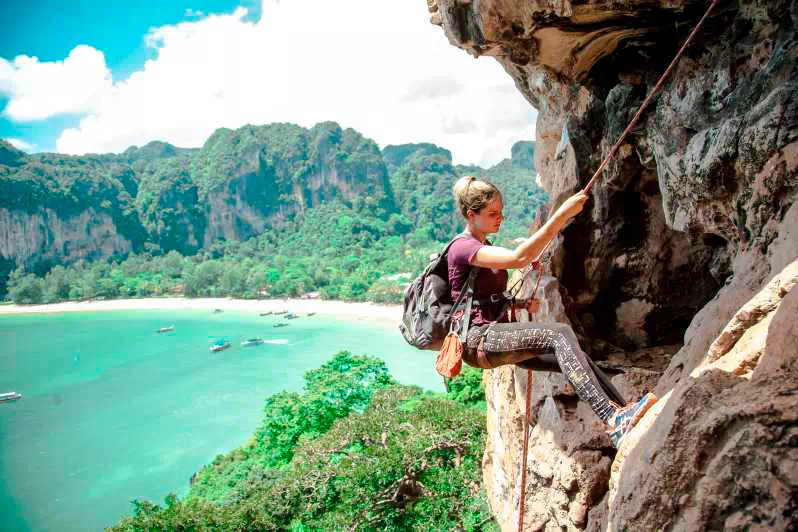
Many routes start right from the beach, so between climbs you can walk into the sea and cool off. That mix of climbing and swimming is what makes Railay so much fun for a beginner, and why many people leave planning a second session.
Tonsai is the next bay along from Railay West, a laid-back spot with a long history among climbers. The tour is listed as climbing at Railay, and which wall your group uses on the day depends on tide, sun and crowds, so do not book only to climb one particular route.
A typical first climb is short and slab-like, leaning back a little, so your legs do most of the work. After that the instructors move you to something steeper or longer if you are ready. The dramatic overhangs you see in photos are for experienced climbers; enjoy watching them from below.
For families, the short children's routes are a big plus. Kids tend to climb with less fear than adults, and with the special safety equipment parents can relax and take photos instead of hovering.
Average fitness is enough. If you can walk up a few flights of stairs and swim a little, you can climb a beginner route at Railay. Technique matters far more than strength.
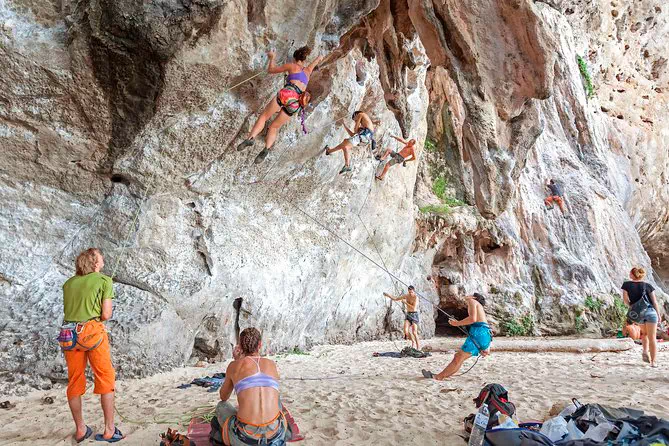
The common beginner mistake is pulling with the arms. Your legs are much stronger, so the trick is to stand up on your feet and use your hands mainly for balance. The instructors repeat this all morning, and the moment it clicks the climb suddenly feels easy.
Expect tired forearms and calves after the half day, not exhaustion. The full day is a different story: by the afternoon your fingers will feel it, and most beginners do fewer climbs after lunch than before.
A few things help more than gym training:
Many beginners who are nervous about heights still enjoy climbing, because you control every move and you can come down whenever you want. Saying "lower" is not failure; it is how every climb ends.
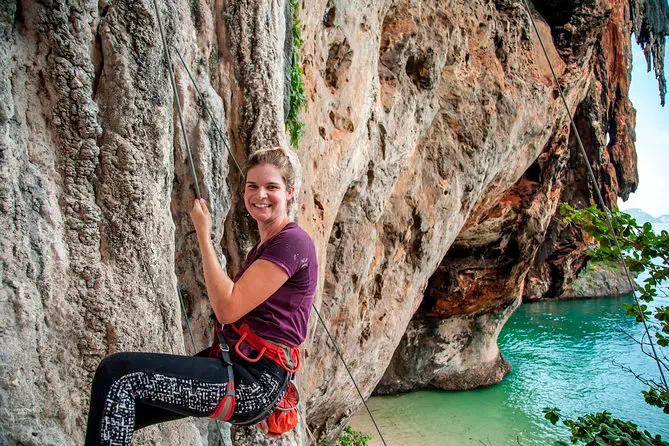
The fear usually hits at the same moment: a few meters up, when you look down. The trick the instructors use is simple. Before you climb, they ask you to sit back in the harness just above the ground, so you feel the rope take your weight. After that, your brain knows the system works.
Set your own goal: the first climb can be only to the first ledge, and that still counts. Many people go a little higher on every attempt. By the end of the morning they reach the top of a route they would not have touched at 09:00.
The full-day rappel from the viewpoint is the part that scares people most. If heights really bother you, book the half day first. You can always come back, and you will not spend the whole afternoon dreading the rappel.
Honest advice for a group: do not push a scared friend. Let them hold the camera, swim and watch. Some decide to try halfway through the morning once they have seen everyone else lower off safely.
Book the half day if it is your first time, you are not sure about heights, or you have kids with you. Book the full day if you already liked climbing somewhere else, or you want the rappel from the viewpoint and a proper day out at Railay.
| Half day | Full day | |
|---|---|---|
| Price | ฿1490 | ฿2490 |
| Time | About 5 hours (08:00 - 13:00) | About 9 hours (08:00 - 17:00) |
| Climbing | Beach cliffs in the morning | Beach cliffs, then climbing and rappelling from the viewpoint |
| Lunch | Not included | Included |
| Best for | First-timers, families, nervous climbers | People who want more routes and the rappel |
Both options include hotel transfer, climbing equipment, the safety briefing, accident insurance, an English-speaking guide and soft drinks. The price difference buys you the afternoon, lunch and the rappel.
My honest opinion: for most beginners the half day is the sweet spot. Morning climbing is cooler, your arms are fresh, and you are back at the hotel by early afternoon for a swim and a nap. The full day is worth it for people who loved the first climb and want more, and you can see the full program on the Rock Climbing Tour at Railay Beach page.
The climbing tour suits first-timers, families with kids old enough for the short routes, and anyone who wants Railay with something to do beyond the beach.
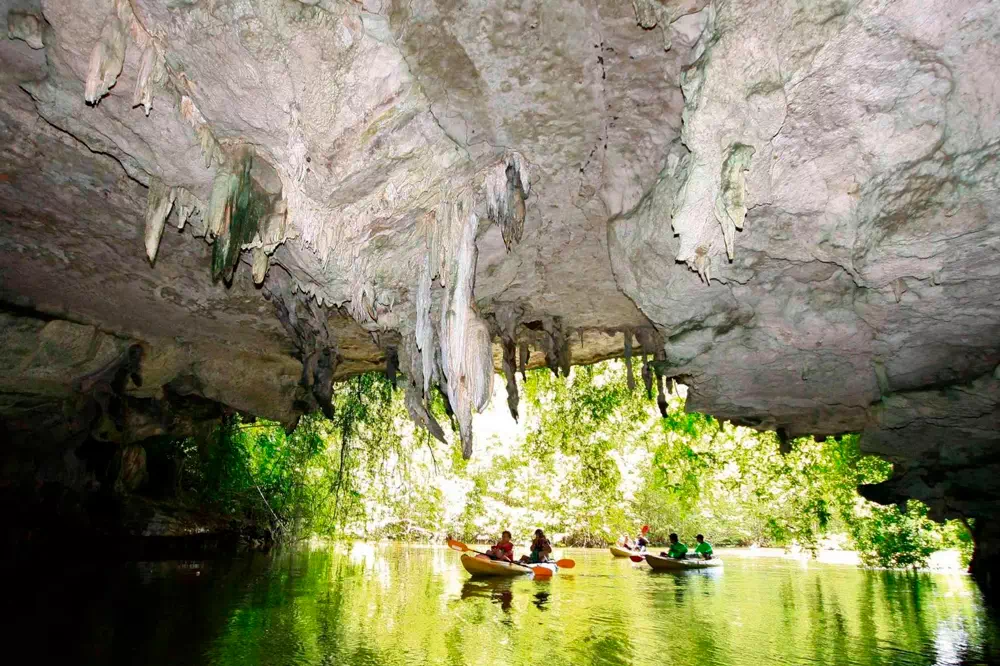
If climbing is not for someone in your group, there are calmer active days. Kayaking through the caves at Bor Thor suits people who want adventure without heights, and the 4 Islands longtail trip suits those who just want beaches and snorkelling, including a stop at Phra Nang beach under the Railay cliffs.
You can read more about the Bor Thor kayaking tour and the 4 Islands longtail tour if you want to plan another active day around your climb.
Climb in the morning and in the drier months if you can. The heat on limestone is the beginner's biggest enemy, more than the height: sweaty hands slip, and you tire faster in the sun.
The dry season, roughly November to April, is the most comfortable time to climb in Krabi, while rain in the wetter months can make the rock slippery and cut sessions short. Weather changes from year to year, and the tour itinerary may change with the weather, so keep a spare day in your plans if climbing matters to you.
Even in the dry season the middle of the day is hot. Shade moves around the cliffs during the day, and the instructors will pick walls with that in mind, but you still need to drink much more than you think.
The tour list says to bring:
Add light sports clothes that you do not mind scraping on the rock, shorts that let you lift your knees, and a small bag that can get wet on the longtail. Leave rings and watches at the hotel; they catch on the rock.
When you have picked a date, browse the other Krabi tours to build the rest of your week around it, and leave a rest day after the full day: your forearms will thank you.
Yes. Railay has routes made for children, only 3 to 4 meters high, and special safety equipment is used. Kids often climb with less fear than adults. Check with the instructors on the day which routes suit your child's age and size.
No. The climbing equipment is included in the tour price. You only need swimwear, sunglasses, sunscreen and a towel, plus clothes you can move in.
Beginners climb on a top rope with instructors who check the harness and knot before every climb. The tour also includes a safety technique briefing and accident insurance. As with any sport, listening to the instructors is the most important safety rule.
Climbing itself happens on the cliffs, not in the water, so swimming is not part of the activity. You do travel by longtail boat to Railay, and you may want to cool off in the sea between climbs, so stay in shallow water if you are not a confident swimmer.
It depends on the group size, your energy and the routes the instructors choose. Expect a few climbs with breaks in between while others take their turn. Most beginners feel their arms before they run out of time.
Usually yes, because beginner routes rely on legs and balance more than on arm strength. Tell the instructors about any health issues before you start. People with heart or other serious medical conditions are not allowed to take part.
They can spend time on Railay beach while you climb, since many routes start from the sand. Ask when booking about joining the boat and transfer as a non-climber, as the tour price is set for climbers.
Hotel pickup, insurance and a licensed local operator. Ask us anything on WhatsApp before you book.
Updated 11 November 2026.