whatsapp, telegram +66-957-269-990
- info@gokrabitours.com


An honest ranking of nine Krabi beaches, from the cliff-framed bays of Railay to quiet mainland sand, with what each is like for swimming, crowds and sunset, and how to actually get there.

It is 8 a.m. in Ao Nang, the longtail drivers are already shouting "Railay, Railay!" along the seafront, and you are standing there with a towel wondering if the beach in front of you is good enough. It is fine. But the best beaches in Krabi are a short boat ride away, and knowing which one to aim for decides whether your day is ordinary or the one you keep talking about.
I have lived here long enough to have favourites and a few beaches I quietly avoid. Below is my honest ranking, mainland and islands together, with what each one is really like for swimming, crowds and sunset.
The best beaches in Krabi are Phra Nang and Railay West on the Railay peninsula, followed by the island beaches of Poda, Tup and Hong. The mainland beaches, Ao Nang, Nopparat Thara, Klong Muang and Tubkaek, are pleasant and easy to reach but rarely as clear or as dramatic.
That split is the key thing to understand about Krabi. The most beautiful sand here sits on islands and on a peninsula with no road, so the boat is part of every great beach day. If you only swim where you can walk from your hotel, you will see the plain side of Krabi.
Here is the whole picture in one table before we go beach by beach.
| Beach | Best for | Crowds | Sunset | How to get there |
|---|---|---|---|---|
| Phra Nang | Scenery, swimming, cave | Busy midday | Partly, cliffs block some | Longtail to Railay, short walk |
| Railay West | Sunset, easy swimming | Busy | Excellent | Longtail from Ao Nang |
| Tup Island sandbar | Walking on the sea at low tide | Busy with tours | Only on a sunset trip | Island tour or private boat |
| Poda Island | White sand, calm water | Moderate | Only on a sunset trip | Island tour or private boat |
| Hong Island beach | Sheltered bay, snorkelling | Moderate | No, day trip | Hong Islands tour |
| Ao Nang | Convenience, boats, food | Busy | Good | Walk from most hotels |
| Nopparat Thara | Long walks, locals' picnics | Quiet | Very good | Short ride from Ao Nang |
| Klong Muang | Resort calm, couples | Quiet | Good | Taxi or resort shuttle |
| Tubkaek | Seclusion, island views | Very quiet | Good | Taxi or resort shuttle |
Yes. Phra Nang is the best beach in Krabi for most people, and Railay West is the best place on the mainland side to watch the sun go down. Both sit on the Railay peninsula, which has no road connection, so you arrive by longtail, usually from Ao Nang or from the Krabi Town side.

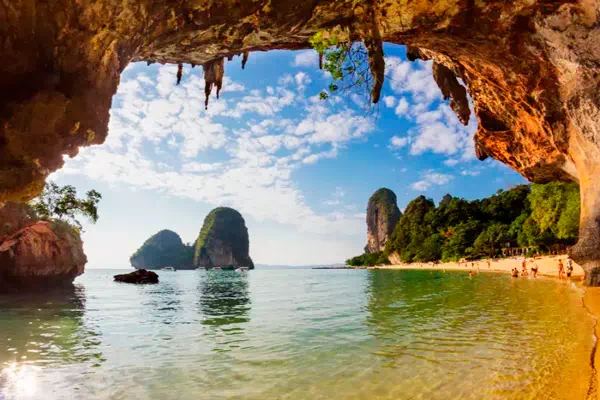
Phra Nang is a curve of pale sand under tall limestone walls, with the Princess Cave shrine at one end. Locals leave offerings there, and the carvings that surprise most visitors are part of a long tradition, so treat the spot with respect. The water is usually calm in the dry season and good for an easy swim, though it gets shallow at low tide.
The downside is no secret: from late morning to mid afternoon Phra Nang fills with day trippers and anchored longtails. If you can, arrive before ten or stay after four, when most island tours have moved on. The light is softer then anyway.
Railay West is a five-minute walk away and has a different feel. It is wider, backed by resorts and restaurants, and faces the sunset directly. Swimming is easy in calm weather, the sand is soft, and the evening view of the karst islands turning orange is the reason people stay on Railay rather than doing it as a day trip.
Skip Railay East for swimming. It is a mangrove-edged shore with mud at low tide, useful as a landing point and for bars, not for a beach day. Climbers also love this area: if you want to try it, the beginner rock climbing tour at Railay uses the cliffs right behind these beaches.
Ao Nang is good enough for a swim, but it is not the reason to come to Krabi. It is a long, open beach with the main road and shops right behind it, and its real strength is that every boat to the islands and to Railay leaves from here.
In the dry season, roughly November to April, the water is calm and fine for families. The western end near the cliffs is nicer than the middle, with more shade and a better view of the limestone. In the rainy months the sea turns choppy and brown after storms, and swimming is often a bad idea.
Ao Nang is busy, with longtails pulling in and out and vendors walking the sand. Think of Ao Nang as your harbour and dinner spot, and go somewhere else for your best swim. The sunset here is genuinely good, and a drink on the seafront at dusk is one of the easy pleasures of staying in town.
A practical tip: bring water shoes if you swim at the ends of the beach, where there are rocks, and keep well clear of the boat lanes marked by buoys. Longtail propellers and swimmers do not mix.
The quietest mainland beaches are Nopparat Thara, Klong Muang and Tubkaek, all north and west of Ao Nang. They are best for walking, reading and sunsets, not for crystal-clear swimming.
Nopparat Thara starts just past Ao Nang and runs for a long way, with casuarina trees along the back. On weekends Thai families come for picnics, and the atmosphere is relaxed and local. At low tide the sea pulls far out and leaves wide flats, which is lovely for a walk and frustrating if you wanted a swim.
It is part of a national park area, and the sunset over the islands is one of the best on the mainland. Go late afternoon, check the tide, and bring a mat for the shade under the trees.
Klong Muang is a resort beach further north. It is calm, tidy and has fewer vendors, which suits couples who want quiet. The sand is coarser than on the islands and there are rocky patches at low tide, but the views across to the small islands are pretty.
Tubkaek is the most secluded of the three, with a handful of upmarket resorts and a big view of Hong Islands on the horizon. There is very little here except the resorts, so it is perfect for a slow honeymoon and dull for anyone who wants to wander out to eat. Getting to Ao Nang means a taxi or a resort shuttle each time.
My honest view: these three beaches are great places to stay if you want calm evenings, as long as you accept that your best swimming days will still involve a boat out to the islands.
Tup and Poda are the island beaches most visitors see on the 4 Islands trip, and both are worth it. Tup is famous for the sandbar that appears at low tide and links it to Chicken Island, and Poda has some of the whitest sand near Ao Nang.

The sandbar is the photo everyone wants: people standing in the middle of the sea between two islands. Whether it is a wide strip of sand or underwater depends entirely on the tide on the day, so do not be disappointed if you only get a narrow ridge. It is still fun to walk, and the water on either side is shallow and warm.
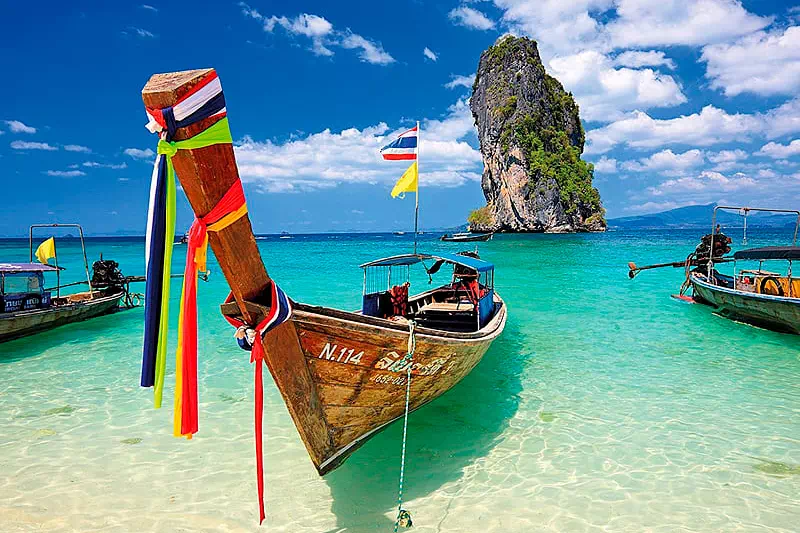
Poda is a classic island beach with a big limestone tower offshore and calm, clear water in the dry season. It is a good swimming stop and quieter than Phra Nang, though day-trip boats arrive in waves. Snorkelling around these islands is pleasant rather than world class, with small reef fish and some coral near Chicken Island.

You cannot reach Tup or Poda on your own except by hiring a boat. The 4 Islands tour by longtail from ฿1290 visits Phra Nang, Tup, Chicken and Poda in one day, from 08:30 to 15:30, with hotel transfer, lunch, snorkelling gear and an English-speaking guide included. The national park fee is paid on top, so keep some cash.
The speedboat version from ฿1490 covers the same four stops with less time on the water and more on the sand. The longtail is slower, louder and more traditional, which some people love. If you are torn between the two, pick the speedboat for small children and the longtail for the classic feel.
The beach on Hong Island is calmer and more sheltered than the 4 Islands stops, with cliffs on three sides and clear water that is good for snorkelling straight off the sand. It is further away, north of Ao Nang towards Phang Nga Bay, so it feels more remote.

The beach itself is small and the island is national park land, so there is no village or hotel, just sand, jungle and the monitor lizards that wander around without much fear of people. The Hong lagoon, an enclosed pool inside the island's cliffs, is the other highlight of the trip, and you see it from the boat.
For pure beach quality, Hong wins; for variety and the famous sandbar, the 4 Islands trip wins. If you have time for only one island day and you care most about calm water and fewer people, I would pick Hong.
The Hong Islands tour by longtail starts from ฿1490, and the speedboat tour from ฿1690 also includes the viewpoint climb and stops at Pak Bia and Lao Lading islands. Both include hotel transfer, lunch, snorkelling gear and a guide. As with the other islands, the park fee is paid separately.
The 4 Islands longtail suits budget travellers who want the classic Krabi day, the speedboat suits families who want less time on the water, and the Hong tour suits anyone after calmer, clearer swimming:
Railay West is the best sunset beach in Krabi, with Nopparat Thara a close second for a quieter evening. Ao Nang is good too, especially from the western end.

The catch with Railay is getting back. After dark the longtails to Ao Nang run less often and the sea can be rougher, so check the last boat time on the day and do not leave it too late. If you are not staying on Railay, the sunset there can end with a stressful scramble for a boat.
A neat alternative is the 7 Islands sunset tour from ฿1590. It runs in the afternoon from 13:30 to 19:30, visits Tup, Chicken, Poda and Railay, and ends with a BBQ dinner, the sunset on the water and a swim with glowing plankton after dark. You get the island beaches and the sunset without worrying about the last longtail.
For couples or a group of friends, a private longtail is another option: the private longtail charter starts from ฿6900 for four hours and takes up to 8 guests, so you choose which beach to sit on and for how long.
Krabi beaches are at their best from about November to April, when the Andaman Sea is calm and clear. From roughly May to October the southwest monsoon brings waves, rain and murky water, and some days the island trips are cancelled or changed.
The rainy season is not a write-off. Many mornings are sunny, the beaches are much emptier, and the green is beautiful. But red flags on the beach mean no swimming, and on the open west-facing beaches the currents can be strong, so respect them even if the water looks inviting.
A short packing list for a Krabi beach day:
Check the tide before you go to Tup or Phra Nang, swim early when the water is calmest, and leave the most popular beaches to the midday crowd. If you are unsure which island day fits your plans, the guide to the best island tour from Krabi compares them side by side, or you can send a WhatsApp message from any tour page and ask.
You can swim most days from November to April, when the sea is usually calm. From May to October waves and currents increase, and red flags mean no swimming. Many rainy-season mornings are still fine, but check the flags and ask locally.
Railay itself is reached by longtail, so you pay the boat fare, which you can check at the Ao Nang ticket booth on the day. Island beaches such as Poda, Tup and Hong are in national park areas with a separate park fee. Bring cash for both.
Railay West and the western end of Ao Nang are the easiest in the dry season, with soft sand and gentle water. Poda is also good on a calm day. Avoid long swims at the busy longtail landing points.
Not much on the mainland, where the water is often cloudy. The Hong Island beach and the reefs around Chicken Island are the better options, and they are reached by boat. Expect small reef fish and some coral rather than a big dive-site show.
Jellyfish can appear, more often in the rainy season and after storms. Look for warning signs or vinegar posts on the beach and ask a lifeguard or local if unsure. A light rash vest helps if you plan to snorkel for a long time.
Railay puts you right on the best sand and lets you enjoy Phra Nang before and after the crowds. Ao Nang is cheaper, has more restaurants and makes it easier to join island tours. Many people stay in Ao Nang and spend one night on Railay.
Early morning, before about ten, or late afternoon after four. Around midday it is crowded with day trips and anchored boats. Low tide also makes the water shallow, so check the tide table if you want a proper swim.
Hotel pickup, insurance and a licensed local operator. Ask us anything on WhatsApp before you book.
Updated 7 November 2026.