whatsapp, telegram +66-957-269-990
- info@gokrabitours.com


An honest look at the southwest monsoon in Krabi: how the rain usually falls, what the swell does to boat trips, how cancellations are decided and which inland tours save a wet day.

It is eight in the morning in Ao Nang, the sky over the karsts is the colour of wet concrete and you have a 4 Islands trip booked for today. The street is still dry, the longtails are bobbing a bit more than yesterday, and you are wondering whether the boat is going at all.
That is what Krabi monsoon season feels like in practice: not a wall of water for six months, but a lot of small decisions. This guide explains how the rain usually behaves, what the sea does, which trips tend to run, and what to do on the days the boats stay at the pier.
Krabi's wet season comes with the southwest monsoon, roughly from May to October, and the rain usually arrives in heavy bursts with dry hours in between. Most rainy-season days are a mix of sun, cloud and one or two downpours, not all-day rain.

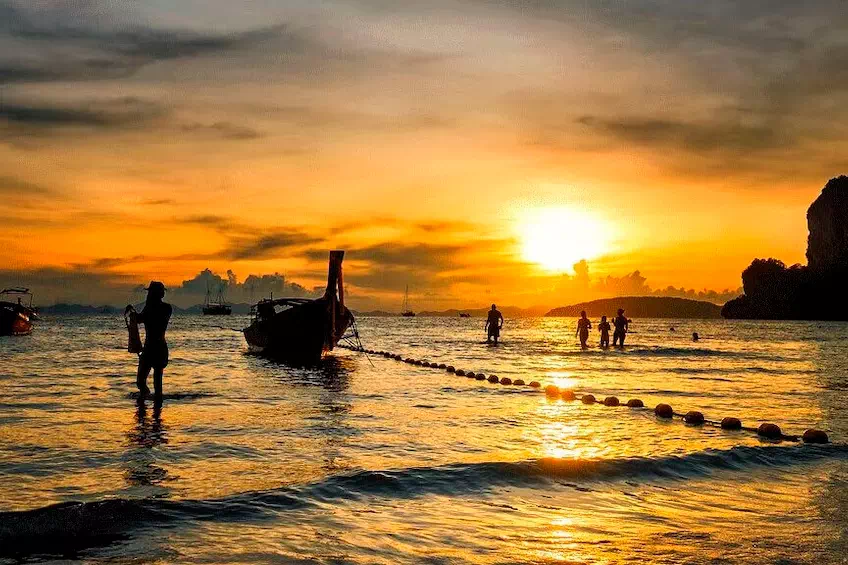
A typical pattern: a bright or hazy morning, clouds building over the cliffs around midday, then a hard shower for an hour or two in the afternoon or evening. After it passes, the air is cooler and the light over the limestone is lovely.
That said, the monsoon does not follow a script. Some weeks bring two or three grey days in a row with steady drizzle and strong wind, especially later in the season. In many years September and October feel the wettest, while May and June can be surprisingly pleasant, but this changes from year to year, so check the forecast rather than the calendar.
What you get in exchange is real: fewer crowds on the beaches, quieter viewpoints, lower hotel rates and a green Krabi that dry-season visitors never see.
The heat does not go away with the clouds. It is still hot and very humid, and the sun burns through thin cloud more than people expect, so sunscreen stays in the bag. The big difference is at night: after an evening storm the air feels fresher and sleeping with the window open becomes possible again.
Rain also changes small daily things. Roads in Ao Nang and Krabi Town can flood for an hour after a heavy downpour, scooters become a bad idea on wet hills, and a short taxi ride can take longer. None of this ruins a trip, but it is worth leaving more time for pickups and transfers.
For a month-by-month picture of weather and sea, read the best time to visit Krabi before you fix your dates.
The monsoon wind blows from the southwest across the open Andaman Sea, so the west-facing coast gets swell, choppy water and murkier visibility. The more open water a trip crosses, the more the swell matters.
Close to the coast, around Railay and the 4 Islands, waves are usually manageable on most days. Further out, on the run to Phi Phi, a speedboat can slam through the swell for a long stretch, which is fine for some people and miserable for anyone who gets seasick.
Visibility is the other change. Rain washes sediment off the mainland and the swell stirs up the sand, so snorkelling can be cloudy on some days and still decent on others. If clear water is the main reason for your trip, the dry season is the better bet.
The beaches change too. Ao Nang can get rougher surf on monsoon days, and swimming in big waves on the west coast is a real risk. Watch for red flags and stay out of the water when the sea looks angry, even if the sun is out.
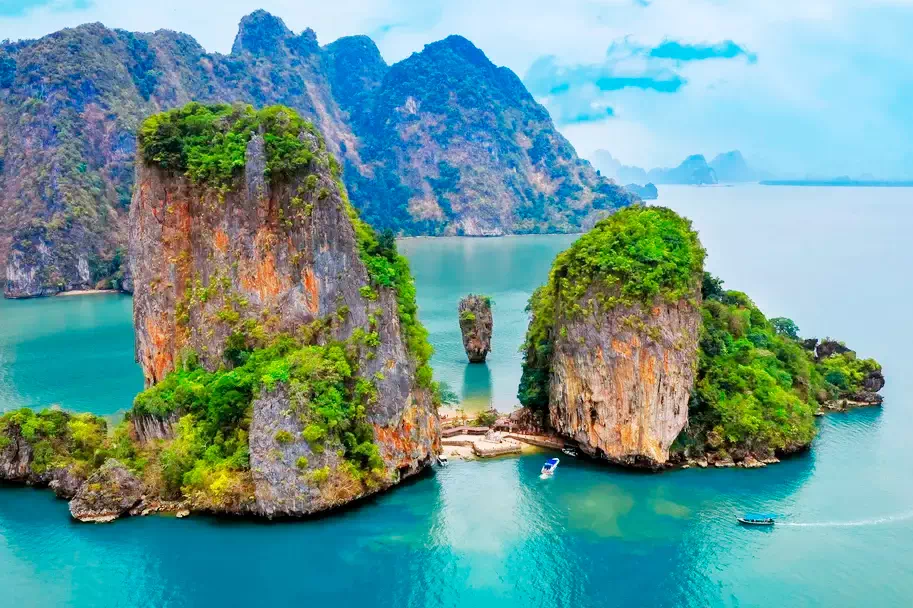
Sheltered trips in Phang Nga Bay run most reliably, short trips along the coast run on most days, and long open-water trips are the ones most often changed or cancelled. The Similan Islands National Park is usually closed every year from mid-May to mid-October, so the Similan day trip simply does not run in the monsoon.
This is a general guide based on how the sea usually behaves, not a promise for any single day:
| Trip | Where it goes | Rainy season outlook |
|---|---|---|
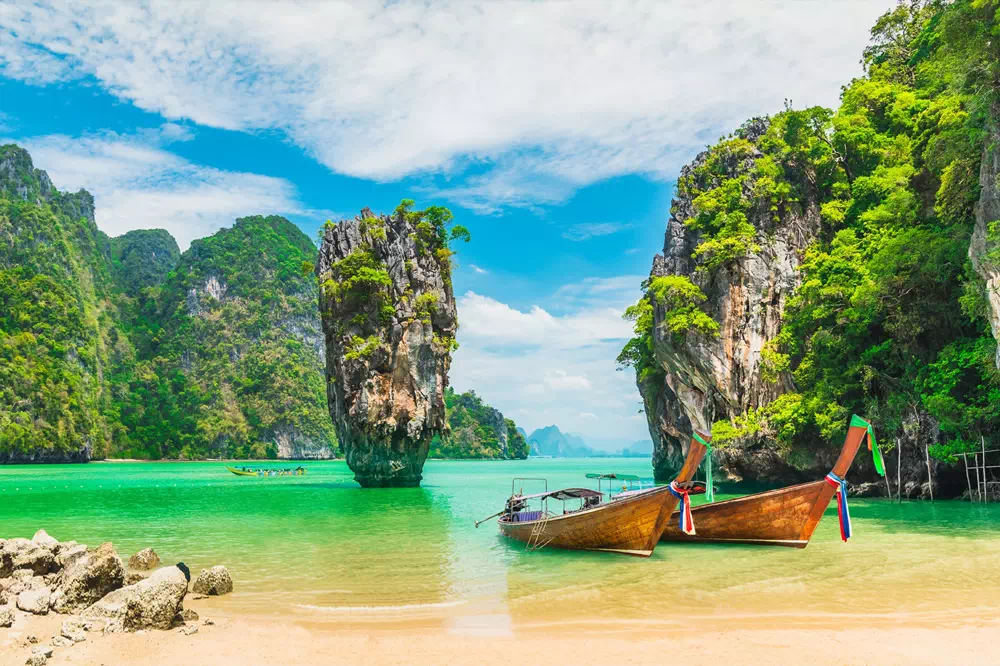
| James Bond Island (longtail ฿1890, speedboat ฿2290) | Phang Nga Bay, sheltered by karsts | Usually the most reliable boat trip, kayaking in calm water |
| Hong Islands (longtail ฿1490, speedboat ฿1690) | North of Krabi, partly sheltered | Often runs; the lagoon is calm, the crossing can be bumpy |
| 4 Islands (longtail ฿1290, speedboat ฿1490) | Close to the coast off Railay | Runs on most days; sandbar and snorkelling depend on tide and sea |
| 7 Islands Sunset (฿1590) | Same islands, afternoon and evening | Afternoon showers are the main risk; a cloudy sunset is common |
| Phi Phi by speedboat (฿1890) | Open Andaman Sea | The trip most likely to be bumpy, changed or cancelled |
| Similan Islands (฿3090) | Far offshore | Not running: park usually closed mid-May to mid-October |
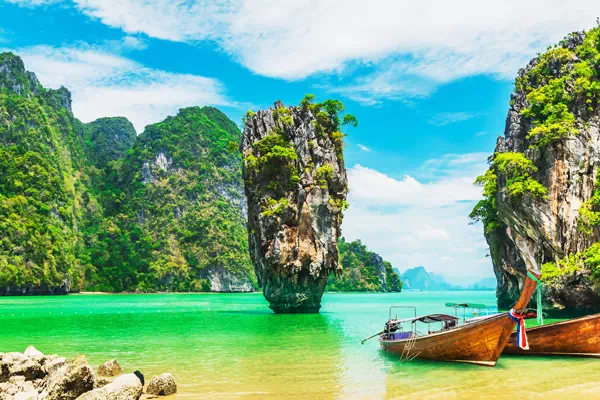
My honest advice for a monsoon trip: put Phang Nga Bay first. If you only do one boat day, James Bond Island or Hong Islands gives you the karst scenery with the least weather risk. The longtail or speedboat comparison for James Bond Island helps you pick the boat.
Phi Phi is still possible on a calm spell, and some of the best Phi Phi days happen right after a storm clears. Just do not make it the one thing your trip depends on, and do not book it for the morning of your flight home.
For a wet-season week, these three boat trips are the ones I would look at first: James Bond Island by longtail for the calmest water and kayaking, Hong Islands by speedboat for the lagoon with a shorter ride, and the 4 Islands by longtail for a cheap, close-to-shore beach day.
The boat operators decide, based on the marine weather warnings and what their captains see that morning, and they can change the program because of the weather without prior notice. A changed route or a cancelled trip in the monsoon is a safety call, not bad service.

In practice there are three outcomes. The trip runs as planned. The trip runs with a changed order of stops, or skips a stop where the sea is too rough to land or snorkel. Or the trip is called off, usually the evening before or early in the morning.
When the local authorities issue a strong wind warning, small boats stay in, and nobody can argue with that. On other days the call is about comfort and safety at a particular beach, which is why the same tour can run on one route and change on another.
What you should do when booking:
One more thing: rain alone rarely cancels a trip. You get wet anyway when you snorkel. It is wind and waves that decide.
The best rainy-day plans in Krabi are inland: the jungle, the hot springs and the elephant sanctuary all work well when the sea is rough. The Emerald Pool, Hot Springs and Tiger Cave tour from ฿1390 is the classic wet-weather day out.
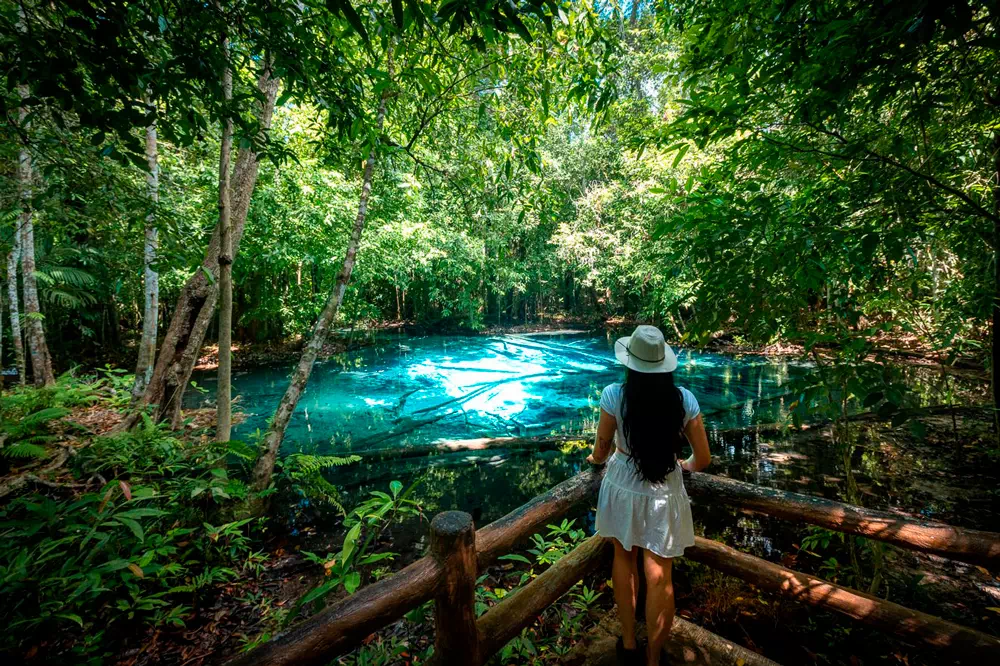
The Emerald Pool, Hot Springs and Tiger Cave tour is a full day in the forest. You swim in a jungle pool, soak in warm springs and visit the Tiger Cave Temple, and none of it depends on the sea. After heavy rain the pool can look less clear than on postcards, but the forest is at its greenest.
A warm hot spring is also simply nicer on a grey day than on a scorching one. It is one of the few places in Krabi where cloud cover improves the experience.
The elephant sanctuary half-day tour (from ฿2490) is another good choice. You prepare food, feed the elephants and bathe with them, so you are going to be wet in any case. Bring a change of clothes and mosquito repellent, which you will need more in the rainy months. Before booking any elephant experience, read what you do at an ethical elephant sanctuary in Krabi.
What to skip on a wet day: rock climbing at Railay. Wet limestone gets slippery and climbing may not run in heavy rain, so keep it for a dry spell. The same goes for long viewpoint hikes; muddy steps are slow and the view may be in the clouds.
Yes, both are good monsoon choices, and rafting is often at its best then. Rain feeds the rivers, so the rapids on the Songprak river usually have more water in the wet season than in the dry months.
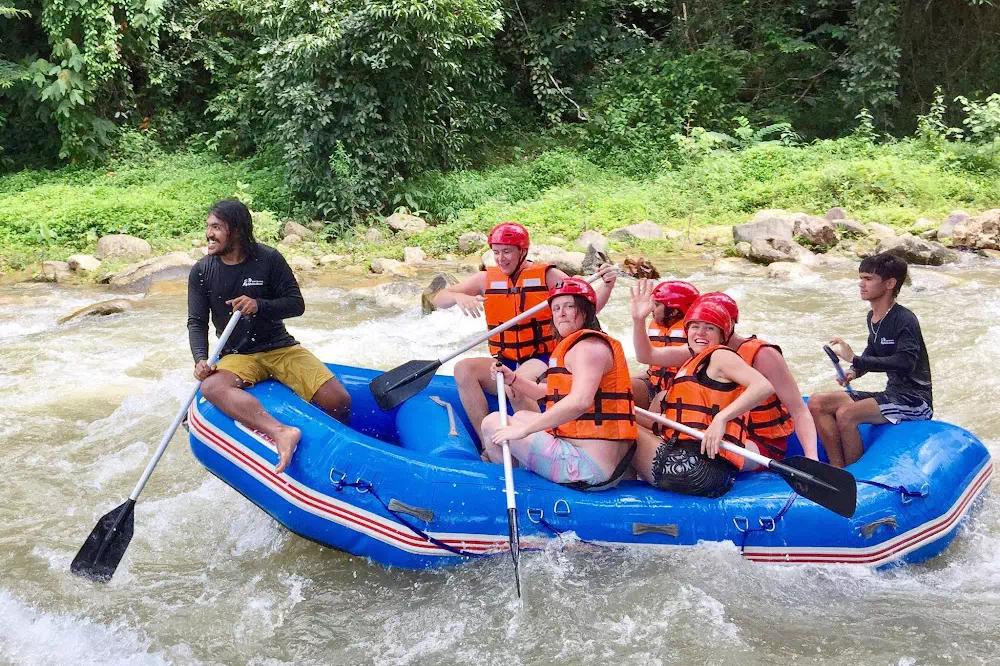
The white water rafting tour (from ฿1790) is a full day on a jungle river, with instructors and helmets. Heavy rain the night before often means livelier rapids. On extreme days the river can be too high and the operator may change the plan, which is another reason to keep a spare day.
The Bor Thor kayaking tour (from ฿1790) works on rainy days because it stays in sheltered mangrove channels and limestone caves rather than on open sea. Paddling under a cave roof while it pours outside is a very Krabi kind of afternoon. The tidal channels can be busier or quieter depending on the water level, so follow the guide on timing.
Both tours suit active travellers who do not mind getting wet. For families with small children the elephant sanctuary or the Emerald Pool is the gentler option.
For rainy days, here is how the inland tours split: the Emerald Pool tour suits anyone who wants an easy day of swimming and sights, rafting suits groups looking for adrenaline, and Bor Thor kayaking suits people who want nature without big waves.
Plan flexibly: book one or two boat trips early in the week, keep inland tours as back-up, and leave the last day free. A spare day in the plan is worth more than any single forecast.
If you are travelling between May and October and want the islands most, consider the shoulder months at either end, when the weather is more stable. If you want quiet beaches, green jungle and lower prices, the middle of the season can be very good value, as long as you keep the plan loose.
Whatever you book, choose it on the Go Krabi Tours home page or send a booking request from the tour page, and ask about the weather policy for your date when you do.
Yes, for travellers who are flexible. You get fewer crowds, a green landscape and lower hotel prices, and many days still have long dry spells. It is less suited to people who only care about calm sea and perfect snorkelling visibility.
Usually not. The common pattern is heavy showers for an hour or two, often in the afternoon or evening, with dry and even sunny hours around them. Some weeks do bring several grey and wet days in a row, so build in flexibility.
Yes, Railay is reached only by boat, and longtails usually run across from Ao Nang on most days. On very rough days the crossing can be wet and bumpy, or paused for a while. Keep your bag in a dry bag and do not leave the crossing for the last hour before a transfer.
The rules depend on the tour, so ask when you book. In many cases a cancelled trip can be moved to another day. That is why it helps to book boat trips early in your stay rather than on the last day.
It can be. The west-facing beaches get bigger waves and currents when the southwest wind is strong. Watch the beach flags, stay out when the surf is high and swim close to other people.
Yes, standing water after rain means more mosquitoes, especially at dusk and in the jungle. Use repellent, wear light long sleeves in the evening and bring repellent on inland tours like the Emerald Pool and the elephant sanctuary.
No. The Similan Islands National Park is usually closed every year from mid-May to mid-October, so the day trip runs only in the season. If you are in Krabi in September, Phang Nga Bay is the better choice for a boat day.
Hotel pickup, insurance and a licensed local operator. Ask us anything on WhatsApp before you book.
Updated 13 November 2026.