whatsapp, telegram +66-957-269-990
- info@gokrabitours.com


An honest guide to Phra Nang Cave Beach: what is inside the Princess Cave, how to behave at the shrine, the best hours to beat the crowds, and whether to walk over from Railay or arrive on a 4 Islands tour.

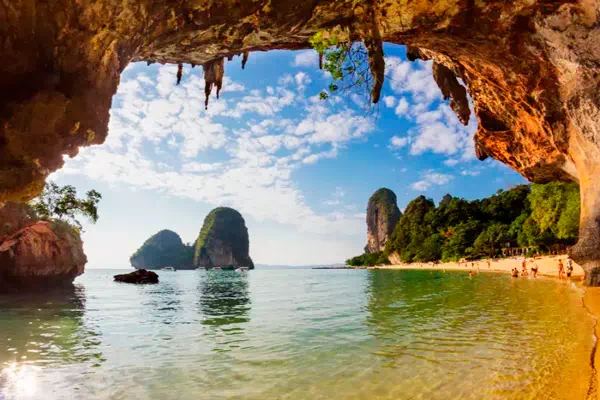
You step off the shaded cliff path, the trees open up, and there is Phra Nang Cave Beach: a curve of pale sand, a wall of limestone streaked orange and grey, and longtail boats rocking at the far end under the cave. It is 8 am, the sand is still cool, and for a while the only other people are a couple of climbers sorting their ropes.
That is the beach at its best. Two hours later it can be a very different place, and that is the main thing this guide is about: how to see it well, how to behave at the shrine, and how to get there.
Phra Nang Cave Beach is a short, sheltered beach at the southern tip of the Railay peninsula near Ao Nang, named after the Princess Cave at its eastern end. It is worth the trip for almost everyone, as long as you go at the right time of day.
The beach is small. Sheer limestone cliffs close it on one side, the cave and a tangle of rock and roots close the other, and the island of Happy Island (Koh Rang Nok) sits just offshore. When the water is calm, it is a clear pale green over soft sand, good for a slow swim.
People sometimes call it Phra Nang Beach, Phranang Cave Beach or just "the cave beach at Railay". They all mean the same place. It is part of the reason the whole Railay area became famous: the cliffs, the sand and the boats in one frame.
My honest take: if you only have one beach day in Krabi, Phra Nang is a better choice than Railay West. It is smaller, the cliffs are closer, and the cave gives the visit a story. But if you hate crowds and can only come at midday in high season, you may leave a bit disappointed.
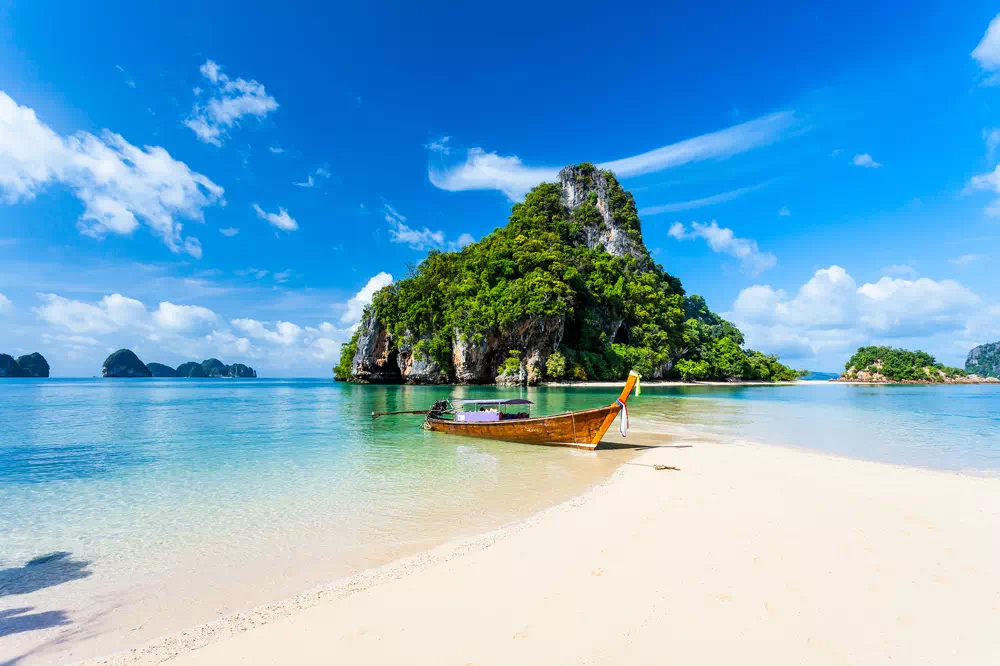
Railay is reached only by boat, even though it is part of the mainland. Cliffs cut it off from the road, so every visitor arrives by longtail from Ao Nang or Krabi, or comes in on a tour boat.
The Princess Cave (Tham Phra Nang) is a shallow cave at the foot of the cliff, and it is a shrine to a female spirit the locals call Phra Nang, "the princess" or "the lady". It is famous for its piles of carved wooden phalluses, left as offerings by fishermen and by people hoping for children.
Walk inside and you see a small altar with flowers, incense, garlands and candles, and around it hundreds of carved offerings of every size. Some are small and painted, some are taller than a person and wrapped in coloured cloth. It is surprising the first time, and that is fine, as long as you remember you are standing in a shrine.

The legend has several versions, and locals do not always tell it the same way. In one, she was a princess whose ship went down off this coast, and her spirit stayed in the cave to watch over the sea. In another, she was the wife of a fisherman lost at sea, who waited for him here until she died.
In every version, she looks after the people who work on the water. Longtail drivers and fishermen leave offerings before going out, asking for safety and a good catch. The carvings are fertility symbols: people come to ask for a child, and many return to give thanks with another carving.
The offerings are not a tourist show. They are added by local people all the time, and older ones fade and crack in the salt air. That is part of what makes the cave feel real rather than staged.
Treat it like any temple in Thailand: quiet, respectful and hands off. Do not touch, move or sit on the offerings, and never take one away.
It is easy to forget you are at a shrine when the beach is right outside and people are in swimsuits. A few simple habits help:
Thai people are generous with visitors, and nobody will lecture you for wearing a bikini near the cave. But they do notice when a group treats the shrine like a joke, and the boatmen who pray here notice most of all.
If you travel with kids, a quick word before you go saves awkward questions inside. A simple "people bring presents to the lady of the cave to ask for good luck" is enough for most children.
Phra Nang is mainly for swimming, lazing and looking up at the cliffs, with climbers often working on the walls around the beach. The water is calmest in the dry season, roughly November to April, when the Andaman Sea is usually flat.
Swimming here is easy in good conditions: the bottom slopes gently and the water is clear. Stay inside the swimming area away from the boats, because longtails come and go at the far end all day. From May to October the monsoon can bring waves and murky water; check the sea on the day and do not swim if the flags or locals say no.

The cliffs around Phra Nang and Railay are a world-class climbing area. Even if you never touch a rope, it is worth sitting in the shade and watching climbers on the walls. If you want to try, the rock climbing tour at Railay Beach is set up for beginners and families, with an instructor and hotel transfer.
Other things people do around the beach:
A word on that viewpoint and lagoon: it is a real scramble, not a walking trail. Sandals are useless, it gets slippery after rain, and people do get hurt. Fit and careful? Go early, with proper shoes and water. Not sure? Skip it and enjoy the beach.
Go early in the morning or late in the afternoon. From about mid-morning, day-trip boats arrive and the beach fills fast, especially in the high season from December to March.
Phra Nang is the first stop of many island tours, and lots of independent visitors come over from Ao Nang after breakfast. By late morning in peak season the sand near the cave can be crowded and the line of boats long. By late afternoon most tours have moved on.
| Time of day | Crowds | Light and heat | Who it suits |
|---|---|---|---|
| Early morning | Quietest, a few climbers and early swimmers | Soft light, cooler, the cliffs shade part of the beach | Photographers, couples, people staying on Railay |
| Mid-morning to early afternoon | Busiest, tour boats and day visitors | Strong sun, hot sand, little shade | Tour guests who see it as one stop of the day |
| Late afternoon | Thinning out as tours leave | Golden light on the cliffs, cooler sea breeze | Independent visitors, sunset lovers |
Tides matter too. At low tide the beach is wider and the rocks near the cave stick out; at high tide the sand shrinks and the water reaches closer to the cliff path. Neither is bad, but low tide gives you more room on a busy day.

If you can only come at midday, do not let that stop you. Visit the cave first, take your photos, and then find shade under the cliffs at the western end. The 7 Islands Sunset Tour is another way to see Railay and the Phra Nang Cave area in the afternoon light, with snorkelling, a BBQ dinner and plankton swimming after dark.
There are two good ways: take a longtail to Railay and walk over, or arrive on a 4 Islands tour, where Phra Nang is the first stop of the day. Which one is better depends on how much time you want there.
Longtail boats run from Ao Nang beach to Railay; the fare is cheap, but check it on the day, because it can change with season and number of passengers. In rough weather the boats may land at Railay East instead of West, or run less often.
From Railay East, a paved path runs along the foot of the cliffs to Phra Nang, past overhanging rock, caves and often a troop of monkeys. It is a short, easy, shaded walk. From Railay West you first cut across the peninsula to the east side, which takes a few minutes more.
Keep food out of sight on that path. The monkeys are used to people and will grab a bag of snacks without hesitating.
The 4 Islands tour stops at Phra Nang and the Princess Cave, then goes on to Tub Island, Chicken Island and Poda Island for swimming and snorkelling. The 4 Islands tour by longtail boat costs ฿1290 for adults and ฿990 for children aged 3 to 11, and the speedboat version ฿1490 and ฿1190.
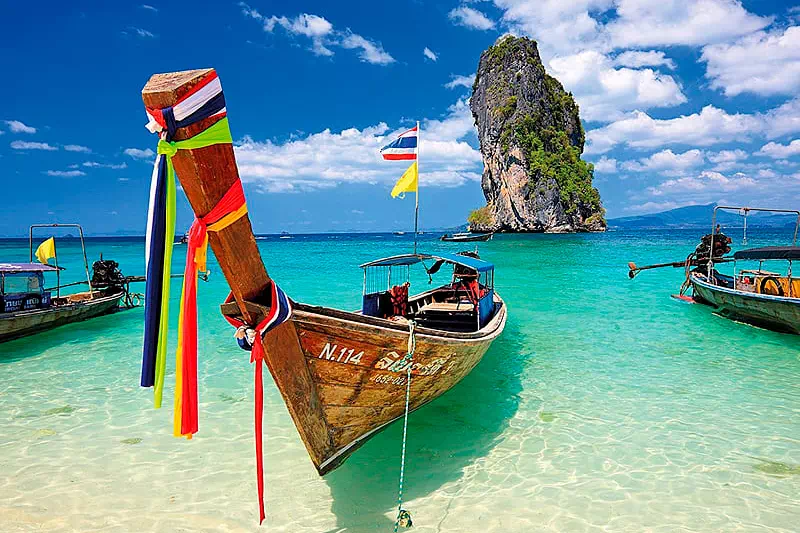
Both run every day, 08:30 - 15:30, with hotel transfer, snorkel mask, life jacket, an English speaking guide, accident insurance, fruit, soft drinks and lunch. The national park fee is not included: ฿400 for adults and ฿200 for children aged 3 to 11, paid separately. Children under 3 go free.
| Walk from Railay | 4 Islands tour | |
|---|---|---|
| Time at Phra Nang | As long as you like | One stop in a full day |
| Best hours | You choose early or late | Morning, set by the tour |
| Other places | Railay beaches and viewpoint | Tub, Chicken and Poda islands, snorkelling |
| Transport | Arrange your own longtail | Hotel transfer and boat included |
| Price | Boat fare only, check on the day | From ฿1290 plus the park fee |
My honest view: if Phra Nang is the place you most want to see, go on your own and give it a full morning. If you want a relaxed day with transport, lunch and several islands, the tour is better value and much less hassle. Not sure which boat to pick? There is a full comparison in 4 Islands tour Krabi: longtail or speedboat.
The longtail tour suits people who like a slower, more traditional ride and a lower price, and the speedboat suits those who want less time on the water and more at the islands.
One thing to know before booking: people with heart or other serious medical conditions, and pregnant women, are not allowed on these tours. The program can also change with the weather, which in the monsoon months happens more often.
Bring less than you think and come early. There is very little shade on the sand at midday, so plan your time around the sun.
Last tip from years of watching visitors here: see the cave first, before the beach fills up, then swim. Most people do it the other way around and end up queuing at the shrine in the midday heat.
No. Phra Nang is a separate, smaller beach at the southern tip of the Railay peninsula, between Railay West and Railay East. It is a short walk from both, and you reach the peninsula only by boat.
They are fertility offerings to the spirit of the cave, Phra Nang. Fishermen leave them to ask for safety and a good catch, and people hoping for a child leave them as a request or as thanks.
Walking over from Railay, visitors usually do not buy a separate ticket for the beach, but rules can change, so check locally. On the 4 Islands tour you pay the national park fee separately: ฿400 for adults and ฿200 for children aged 3 to 11.
Yes, families visit every day and the beach is easy for children. Explain the shrine in simple words before you go, and keep kids from climbing on the offerings.
It is fine for a casual look around the rocks when the water is clear, but it is not a reef spot. For better snorkelling, Chicken Island and Poda Island on the 4 Islands tour are a better choice.
Phra Nang is one stop of a day that runs 08:30 - 15:30 and also includes Tub, Chicken and Poda islands. It is enough to see the cave, take photos and swim, but if you want a long, slow beach morning, go independently.
Yes, but the sea from May to October can be rough and the longtails from Ao Nang may run less often or land at Railay East. Check the weather on the day and do not swim in big waves.
Hotel pickup, insurance and a licensed local operator. Ask us anything on WhatsApp before you book.
Updated 10 November 2026.