whatsapp, telegram +66-957-269-990
- info@gokrabitours.com


The practical rules for visiting a temple in Krabi: what to wear, where your feet and hands go, how to behave around monks, and what to do about photos and donations.
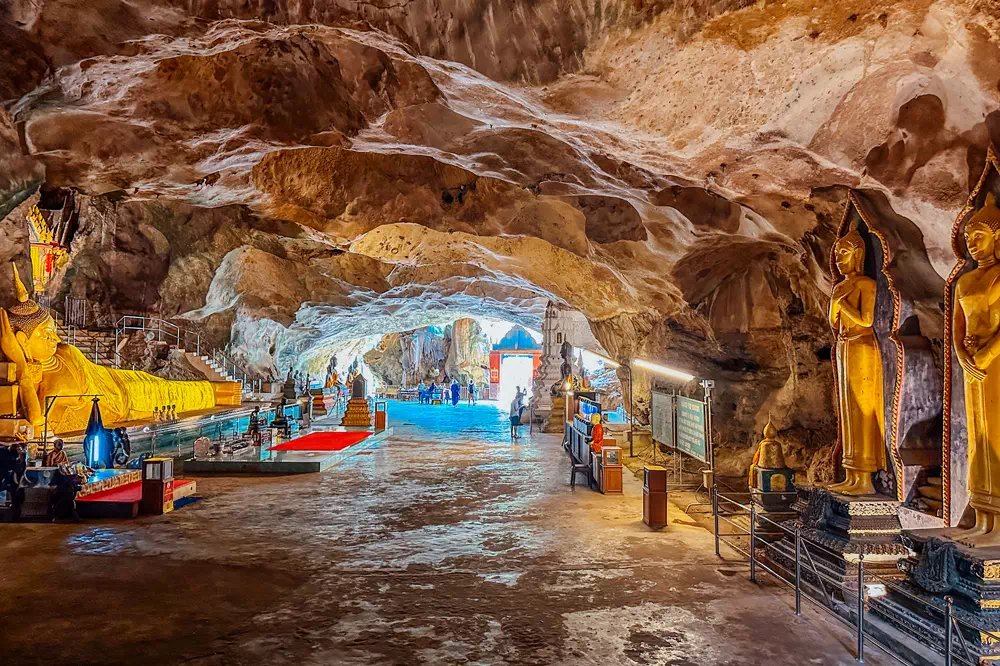
You come down from a morning on the beach, the driver mentions a temple on the way back, and you look down at your flip-flops and beach shorts. That moment happens to almost everyone in Krabi. Thai temple etiquette isn't hard, but a few minutes of knowing it makes the visit far more comfortable for you and for the people who actually pray there.
I have watched plenty of friendly, well-meaning visitors make the same few mistakes. Nobody shouts at them. Thais are usually too polite, and that is exactly why it is worth learning the rules before you go.
Thai temple etiquette is a simple set of habits that show respect for the Buddha, the monks and the local people who use the temple. A temple, or wat, is a working religious place first and a sight second, even when there are tourists and a car park outside.
People come to make merit, mark a birthday, ask for help with a sick parent or simply sit quietly. Monks live there, and in many temples they study, eat and sleep a few metres from where you are taking photos. Keep that picture in mind and most of the rules start to make sense without being memorised.
The good news is that nobody expects a visitor to get every detail right. Effort counts for a lot. Dress properly, keep your voice down, follow what the locals are doing, and small slips will be forgiven with a smile.
The bad news is that the slips people remember are the big, visible ones: beachwear, climbing on statues, a selfie with your back to a monk at prayer. Those are the ones to avoid, and they are all easy to avoid.
Cover your shoulders and your knees, for men and women alike. Clean, loose and modest beats fancy every time, and in this heat loose cotton or linen is what you would want anyway.
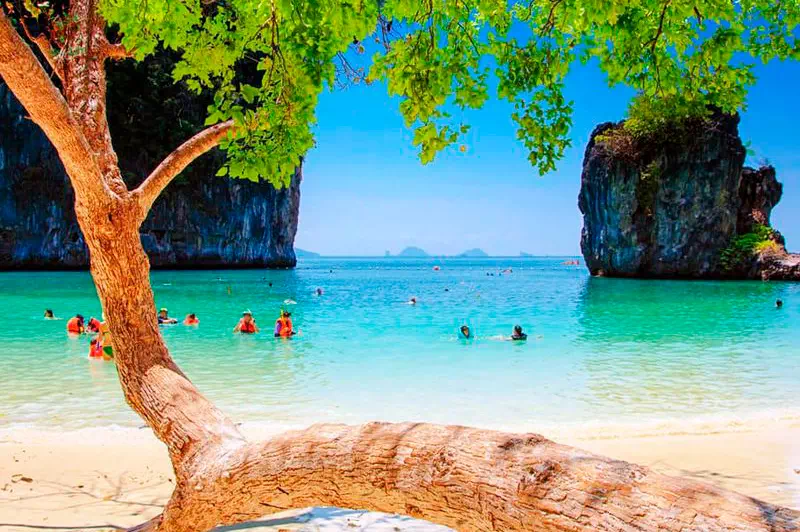
Some larger temples lend or sell cover-ups at the gate, but plenty of smaller ones don't, so never count on it. In Krabi, the common problem isn't rudeness, it's timing: you planned a beach day and a temple stop came up on the way home. A sarong and a light shirt take almost no space in a day bag.
| Item | Fine | Leave at the hotel |
|---|---|---|
| Top | T-shirt or shirt with sleeves, light blouse | Tank tops, crop tops, bikini tops, bare chests |
| Bottom | Long loose trousers, long skirt, sarong, shorts below the knee | Short shorts, mini skirts, swimwear |
| Fabric | Cotton or linen that isn't see-through | Sheer fabric, wet swimwear under thin clothes |
| Shoes | Sandals or anything you can slip off quickly | Lace-up boots that hold up the line |
| Details | Plain clothes, a hat you take off inside | T-shirts with Buddha images or rude slogans |
A word on tattoos. A Buddha image tattooed on the leg or foot can truly upset people, because feet are considered the lowest part of the body. If you have one, keep it covered with long trousers or a sarong around temples.
Clothes printed with the Buddha's face are sold in every market, and many Thais find them uncomfortable too, especially worn below the waist. They make a better wall hanging than a pair of trousers, but honestly I would skip them altogether.
Take your shoes off before you enter any temple building, keep your feet low and pointed away from sacred things, and don't touch anyone's head. In Thai custom the head is the highest part of the body and the feet are the lowest, and most of the rules follow from that one idea.
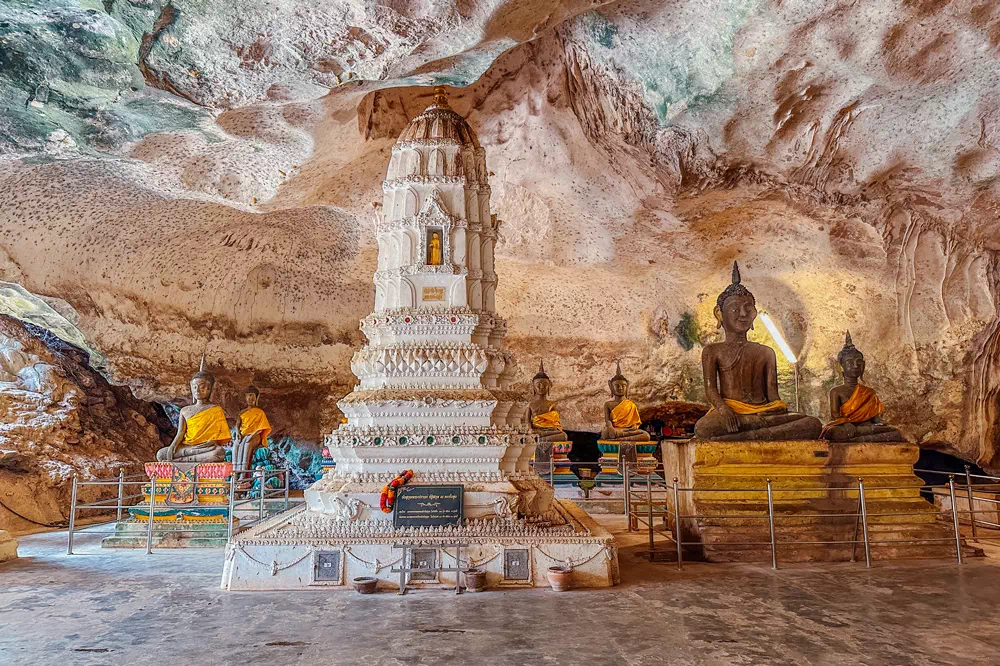
Look for the rack of shoes outside the door, because that is your sign. You can often keep your shoes on in the open courtyard, but remove them for the main hall and for any building with an altar. If you aren't sure, copy the Thai family in front of you.
Step over the raised door sill rather than standing on it. It is a small detail that many older people still care about, and the old belief says a spirit lives in the threshold. It also makes you look like someone who has been paying attention.
Inside, sit on the floor with your legs folded to one side or tucked behind you. Don't stretch your legs out towards the Buddha image, and don't point your soles at anyone. If your knees give up, move to the back or to a side wall, then shift your legs away from the altar. Nobody will mind you shuffling around.
A few more habits that help:
The wai, with palms together and a slight bow, is a nice gesture if a local greets you, or towards the Buddha image if you feel comfortable doing it. It is never compulsory. Don't be surprised if a monk doesn't return it: monks aren't expected to wai lay people.
Give monks space and keep your head lower than theirs if they are seated, wherever that is practical. Women must not touch a monk, not even by accident, and should not hand anything directly to one.
This is about the monk's vows, not about you. Monks have taken a vow under which physical contact with women is forbidden, and even a brush of the arm may mean he has to perform a cleansing ritual. So if you are walking down a narrow path or a crowded stair and a monk approaches, step to one side and let him pass.
If you want to give something to a monk, put it on the table in front of him or on the cloth he lays out. Men can usually hand things over directly, but with both hands and without fuss. On buses and boats, women should avoid sitting right next to a monk, and anyone can offer him a seat.
You may also see monks on their alms round at dawn in Krabi Town or in a village, walking barefoot with their bowls. It is a beautiful thing to see, but it isn't a show. Keep your distance, and if you do join in, take off your shoes, keep your head low, and offer the food without touching the bowl with your hand.
Talking to monks is usually fine and often lovely, particularly young novices who want to practise English. Let them lead the conversation and keep your questions simple, such as where they come from or what their day is like. Women should keep a bit of extra physical distance.
Some temple areas, usually a chedi or a relic chamber, are closed to women. It is more common in northern Thailand than around Krabi, and a sign normally tells you. It may not feel fair, but it isn't the moment to argue.
Usually yes, but look for signs and watch what is happening around you. Never photograph someone mid-prayer at close range without asking, and never turn your back on the main Buddha image for a selfie pose if you can help it.
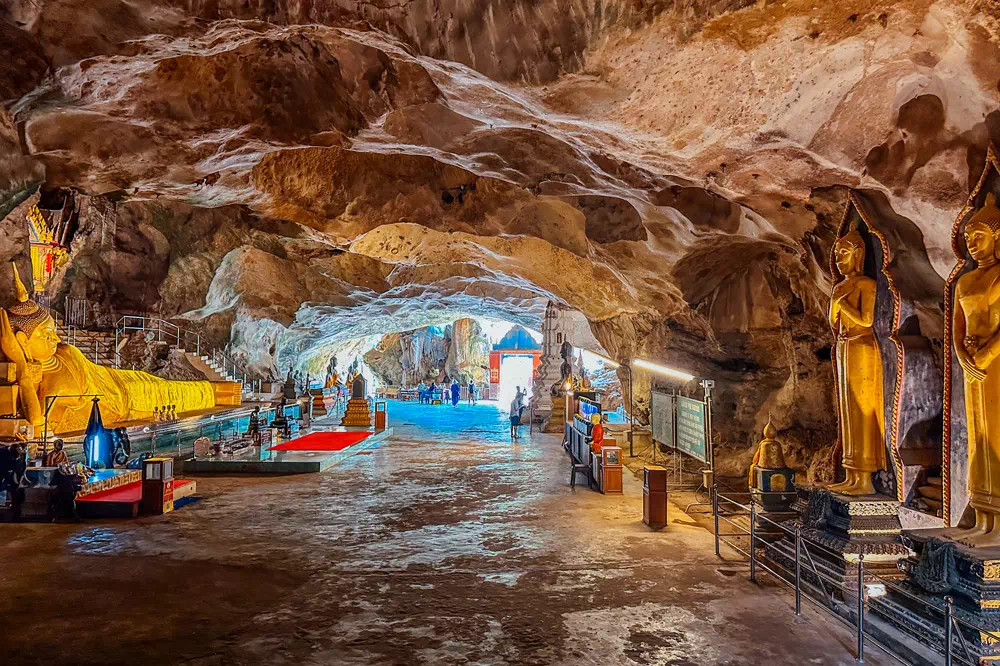
Some halls forbid photos altogether, usually with a clear sign at the door. Follow it, even if you see someone else ignoring it. When you are allowed, keep the flash off and avoid standing between someone and the altar they came to see.
The classic pose to avoid is the one where you stand beside a Buddha statue with an arm around it or copy its position for the camera. To you it is a joke. To a Thai grandmother a few metres away, it is like someone mocking a family elder. A respectful photo of the statue alone is a better souvenir anyway.
Ask before you photograph a monk close up. A smile and a raised camera is enough of a question, and most will nod. Drones are a different matter: don't bring one to a temple at all unless you have clear permission from the people in charge.
No. Donating is voluntary, entrance to most ordinary temples is free or by donation, and there is no correct amount. A small note in the donation box is plenty, and if you stayed for a while and enjoyed the place it's a nice way to say thanks.
Thais call this making merit, or tham bun, and it is part of daily life rather than a tourist tax. You will see people buying lotus buds, candles and incense sets at the temple entrance, and these usually cost very little. You are welcome to buy one and join in. Copy the people around you, and don't worry if your incense sticks are a bit crooked.
Some temples also sell small gold leaf squares for pressing onto a statue, or offer fortune sticks you shake from a cup. These are lovely things to try. Ask someone with a smile, and accept that any instructions will probably come through gestures.
What I would skip: anyone outside the temple who insists you must pay them or buy something to go in, and any "blessing" that turns into a sales pitch. Those are rare in Krabi, and a polite no is all it takes. Real donation boxes sit inside the grounds and nobody watches what you drop in.
The rules are the same, but the setting changes what you need to prepare for. At Tiger Cave Temple (Wat Tham Suea), plan your clothes for both the climb and the shrine, because it is an active forest monastery as well as a famous viewpoint.
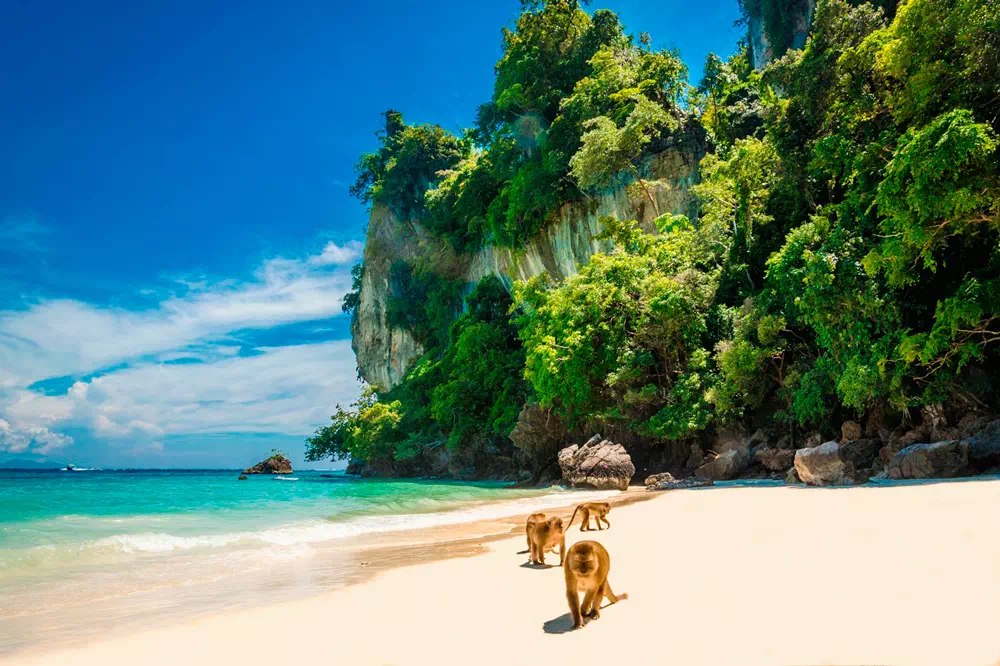
The summit shrine sits at the top of more than 1,200 steps, and yes, you will arrive soaked. Light long trousers or a long skirt and a T-shirt are far better than shorts and a sarong you have to tie on at the top. Bring water, keep it in a closed bag because of the monkeys, and start early. There is a full article coming on the climb itself, so here I'll only say: don't underestimate the heat.
Lower down, you walk into cave halls and shrines where monks and nuns live and pray. Shoes come off at these halls too, so slip-on sandals are easier than trainers at this point in the day.
This temple is also part of the Emerald Pool, Hot Springs and Tiger Cave jungle tour, which is ฿1390. This honest look at that jungle day helps you decide if it suits you.
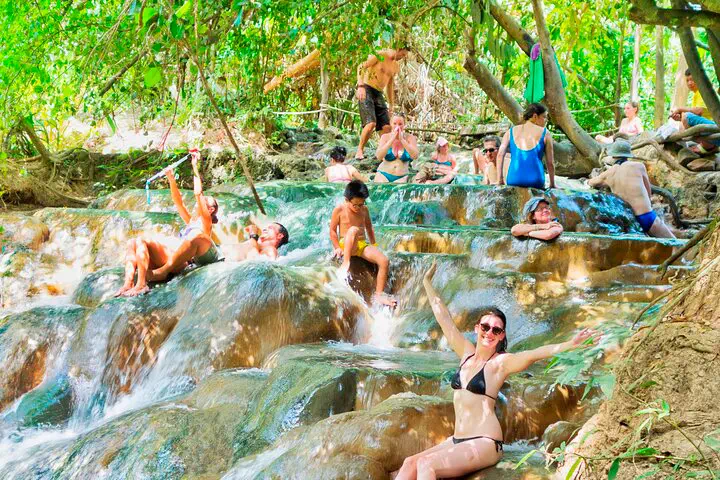
That tour has a dress trap: the same day combines swimwear at the pool and the hot springs with a visit to a working temple. Pack a dry shirt and something for your legs before you leave the hotel in the morning.
In Krabi Town, the best known is Wat Kaew Korawaram, the white temple on a small rise near the town centre, with a long staircase guarded by naga serpents. It is quiet, and you may well be the only foreigner there. That makes it a good place to practise, but also makes you more visible, so dress with care and keep your voice down. Smaller neighbourhood wats are usually even more relaxed, and if you combine one with an evening meal in town, a street food walk makes a pleasant end to the visit.
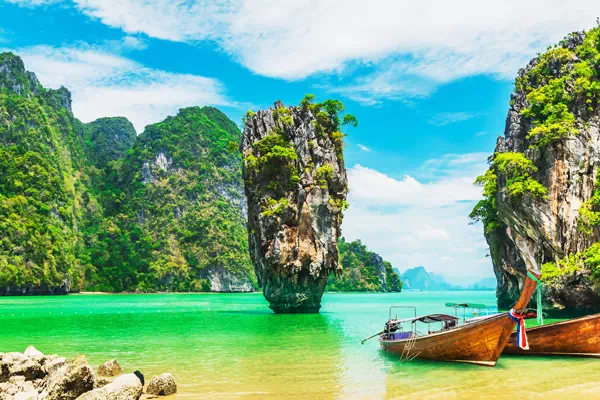
Further north, the cave temple Wat Suwan Kuha in Phang Nga has a fifteen-metre reclining Buddha and plenty of monkeys, and it is a stop on the James Bond Island longtail tour at ฿1890. The same day takes you to lunch on Ko Panyee, a Muslim fishing village on stilts.

This is worth remembering all over southern Thailand. Many people in Krabi are Muslim, so modest clothes matter in fishing villages and near mosques as well, and the swimsuit stays on the beach.
These two day trips are the easy way to see a temple with transport sorted: the jungle tour suits people who want a mix of swimming and Tiger Cave, and the James Bond longtail suits people who want a cave temple plus the bay.
Run through this list and you will be better prepared than most visitors. It takes a minute.
Forgot something and already at the gate? Ask at the entrance, smile and do your best. For the rest of your Krabi plans, the full list of tours is a good place to start.
Short shorts are a no. Long shorts that clearly cover the knee are normally accepted at smaller temples, though long trousers are the safer choice. Men often assume the rule only applies to women, and it doesn't.
Small children get a lot of forgiveness, and nobody expects a toddler to sit still in perfect silence. Dress them modestly anyway, and teach older kids not to climb on statues or point their feet at the altar. If a child gets loud, a quick walk outside solves it.
Generally yes, and nobody will ask. A few temples, mostly in the north, have restricted areas for women, and a sign normally tells you. If you see one, simply follow it like any other visitor.
Early morning is cooler and quieter, and you may catch the sound of chanting. Midday is hot, and in open courtyards the stone gets painfully warm on bare feet. Late afternoon works well too, but check closing times locally since they vary.
Smile, say sorry with a small wai, and carry on. Thais are very forgiving of visitors who are clearly trying, and you are unlikely to get more than a gentle correction. Getting upset or arguing would be a bigger faux pas than the original slip.
Don't eat or drink inside a temple hall. A sip of water in the open courtyard is normal in this heat, but keep snacks for outside the gate. You will often see temple dogs and cats living there, and they are best left alone too.
Yes, you can sit quietly at the back, and you can light incense or offer a lotus if you wish. Nobody will question your religion, and many Thais are pleased to see visitors taking an interest. If chanting is going on, stay still and silent, and don't walk between the monks and the altar.
Hotel pickup, insurance and a licensed local operator. Ask us anything on WhatsApp before you book.
Updated 20 November 2026.