whatsapp, telegram +66-957-269-990
- info@gokrabitours.com


An honest look at the rafting day from Krabi: how rough the river really is, how the safety briefing works, what else is on the programme and who should choose something else.
It has rained all night in Ao Nang, the sea has gone the colour of milky tea, and your island day looks doubtful. This is the moment when people start asking about white water rafting in Krabi, and it is a good question to ask.
Here is the short version. It is a cheerful, splashy day on a jungle river that most reasonably fit people can handle, not a test of courage. Below is what actually happens, how rough it gets and who should book something else.
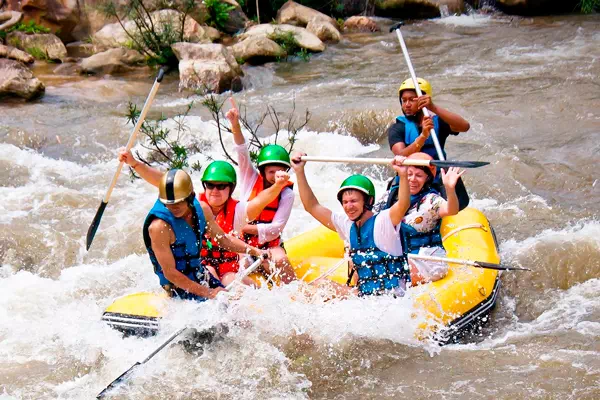
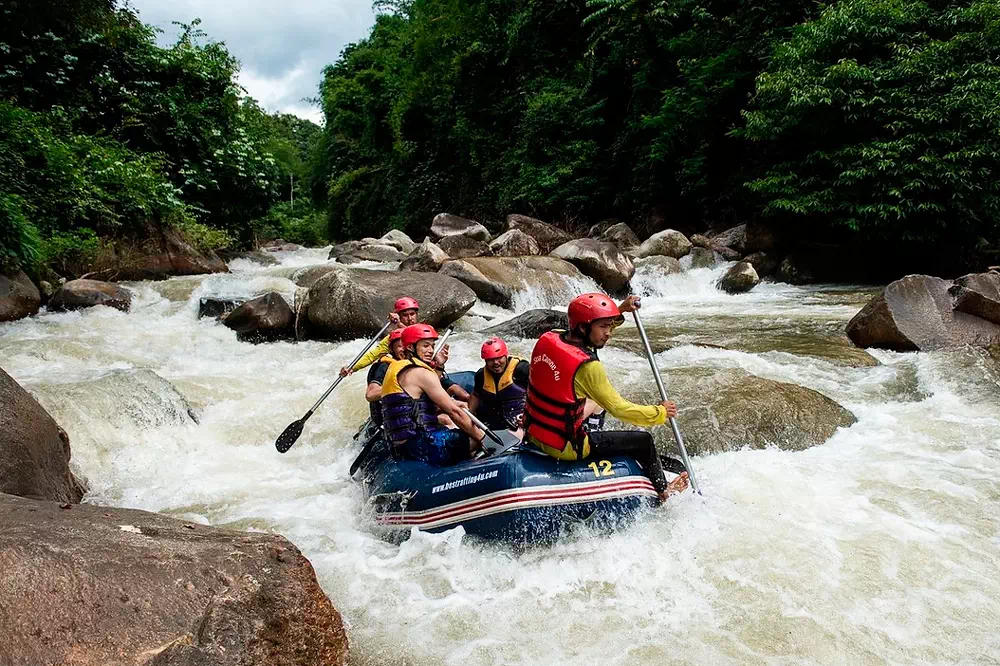
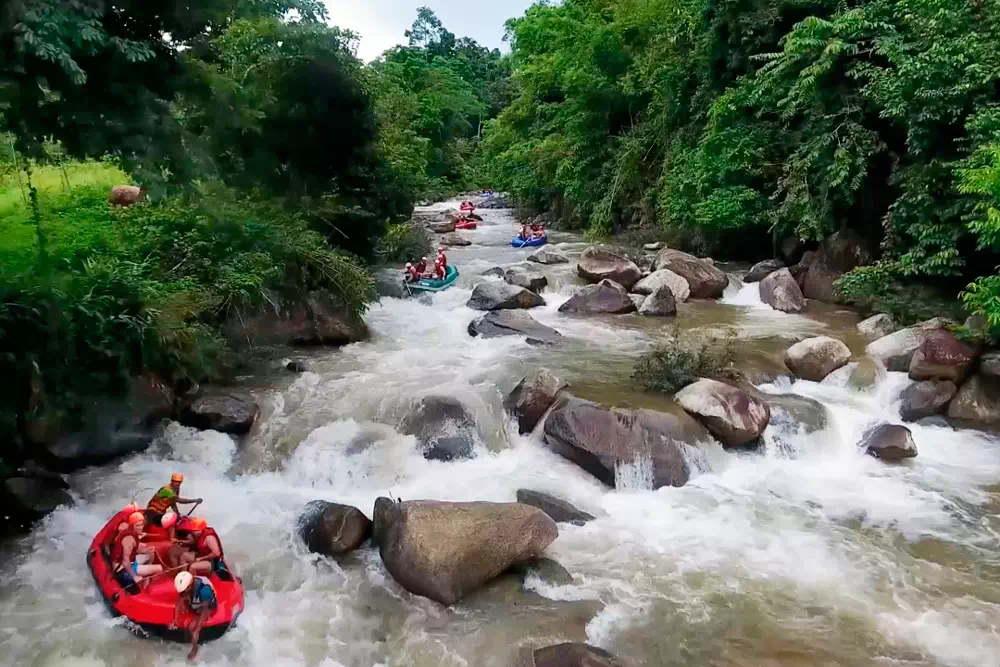
It is a guided trip of about 5 km down the Songprak River (you will also see it spelled Songpak), through rapids between cliffs and sharp bends, with forest on both sides. The rapids are Class 2-3, which means real waves, real splashes and plenty of shrieking, but no giant drops.
One small point of geography. The river is not in Krabi province at all. It is in neighbouring Phang Nga province, about an hour's drive north of Krabi, which is why this is a full-day outing and not a quick morning activity.
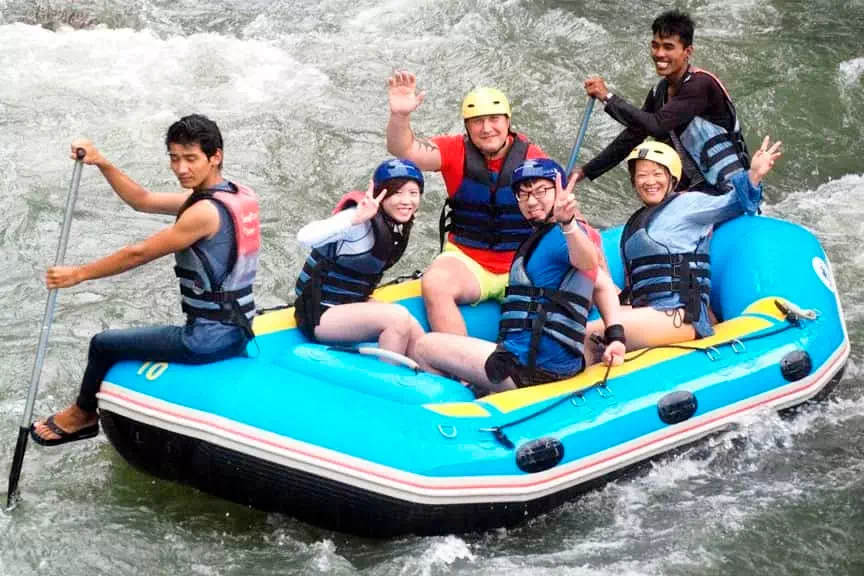
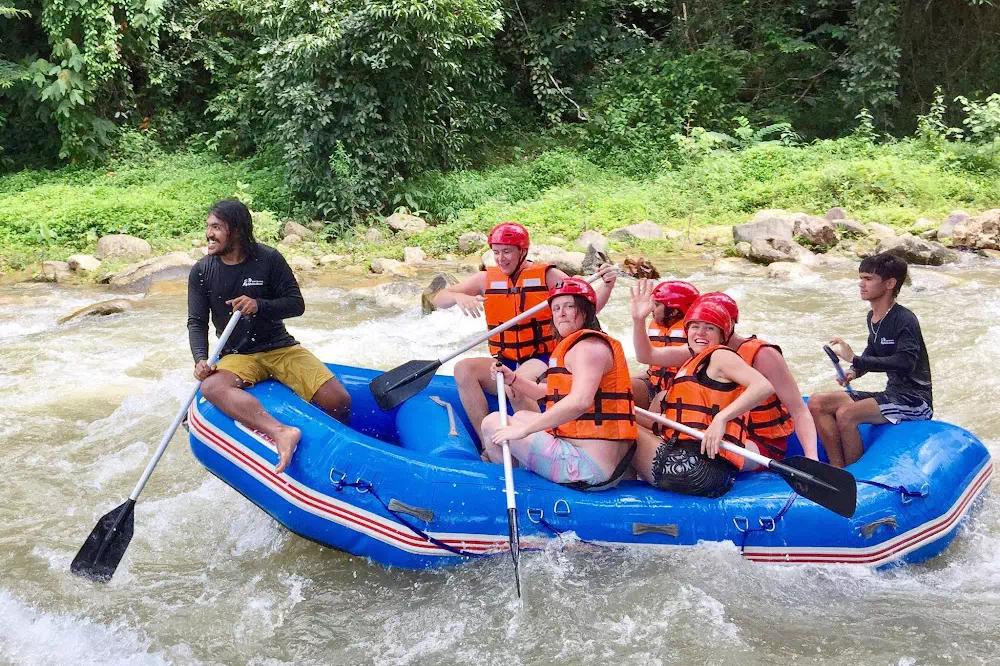
You sit in an inflatable raft that takes 4 to 6 people, with a paddle in your hands and a helmet and life jacket on. Guides sit at the front and rear of the raft, and they read the water and call out what to do.
The feeling is closer to a very good water ride than to an expedition. There are bursts of action in the rapids, then calmer stretches where you can get your breath back, look up at the jungle and laugh at whoever got the biggest wave in the face.
If you have rafted serious rivers in Nepal, Canada or New Zealand, you will find this gentle, and I would rather tell you now. If you have never been in a raft, this is about the right level for a first time.
The tour is run by a local licensed operator, and we sell and book it. The guides and equipment you meet on the day are theirs, so any question about the river itself is best asked at the base camp, where the people who run it every day can answer properly.
It is easy to moderate, and you do not need any experience. The biggest variable is rainfall, since the river rises after heavy rain and drops in long dry spells.
This is the honest part that a brochure skips. The same stretch can feel like a different river from one week to the next. Here is roughly what to expect, as a general guide rather than a promise for your date:
| River condition | What it feels like | Best for |
|---|---|---|
| After a long dry spell | Slower, gentler rapids, more floating and more paddling on the calm parts | Families and nervous first-timers |
| A normal wet-season level | Good waves, steady pace, the most fun for most people | Almost everyone |
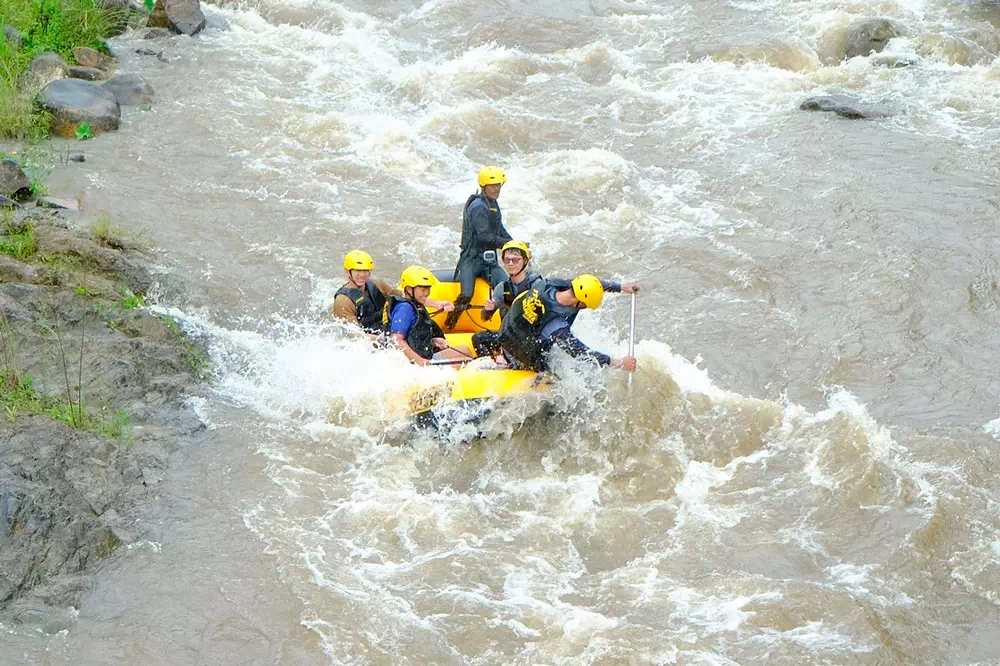
| Just after heavy rain | Faster, muddier and much splashier | Those who want more thrills |
In the driest stretches you may find less excitement than the photos suggest, and it is fair to say so. The day still has plenty in it, but if the rapids are your only reason to go, a lower river could leave you wanting more.
Very heavy rain works the other way. Weather can change the itinerary, and the people running the river make that decision on the day. I would never argue with them about it, because they know this water far better than any of us.
Nobody can promise you a particular water level weeks in advance. If the river is what you care about, keep your date flexible and look at the forecast for the few days before your trip.
Before you get on the water, you get a training session at the base camp covering how to paddle, how to follow commands and what to do in an emergency. Listen to this properly, even if you feel confident, because it takes only a few minutes and it is the most useful part of the day.
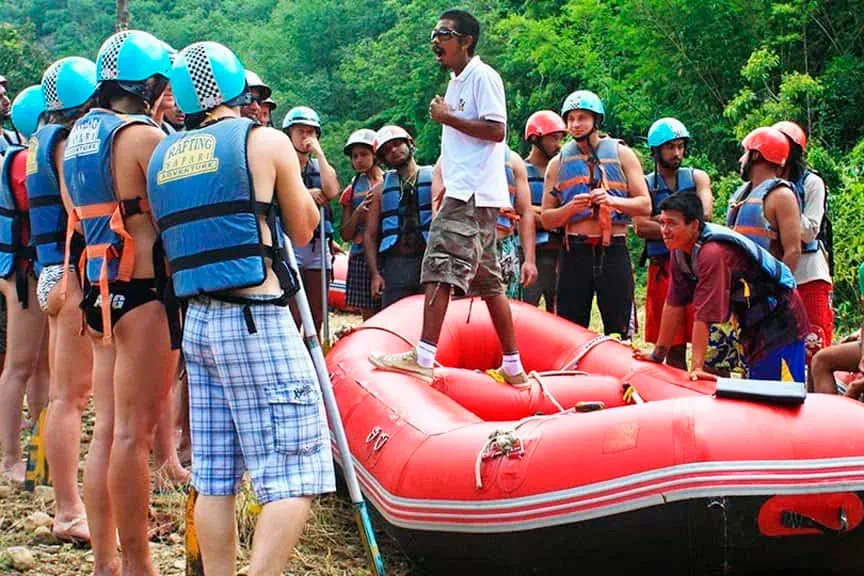
You will be fitted with a helmet and life jacket and handed a paddle. Make sure the jacket is snug and the helmet does not wobble, and ask for another size if it does. A loose jacket is uncomfortable and does its job badly.
The guides are trained in swift water rescue, and they know when to paddle, when to lean and when to steer away from the shore. You will probably learn a few simple commands, such as forward, stop and hold on.
A few basics are worth remembering, and the guide will go over the exact version used on the day:
You can even skip the paddling altogether and hold on with both hands if you prefer. That is a useful thing to know if you are nervous, or if you have a bad shoulder, and nobody will think less of you for it.
A lot, which is the main argument for this tour: rafting is only one part of it. Allow about 9 hours, from pick-up around 08:00 to return around 17:00, because the drive and the extra stops take up most of the day.
Here is the programme. The order of the stops in the middle can vary:
| Time or stage | What happens |
|---|---|
| 07:45 - 08:00 | Hotel pick-up |
| Base camp | Rafting training session and equipment |
| On the river | 5 km rafting run |
| Lunch | Thai lunch and fresh seasonal fruit |
| Jungle walk | Trek to a waterfall, swimming and relaxing |
| Temple | Visit to Wat Suwankuha (the Monkey Temple) |
| 17:00 - 17:30 | Return transfer to your hotel |
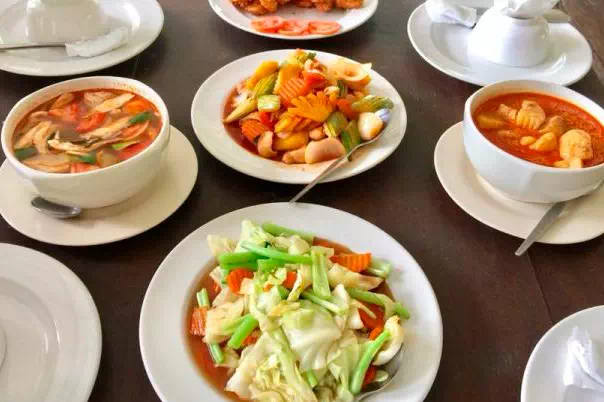
Lunch is simple Thai food served after the rafting, and after the river you will be glad of it. If you do not eat spicy food, say so early, as there are usually milder dishes on the table.
The waterfall is a nice change of pace, with a short walk through the jungle and a cool swim. Your shoes will already be wet, so it does not matter that the path can be muddy. Watch your step on wet rocks, as this is an easy place to slip when you have stopped concentrating.
Wat Suwankuha is a cave temple with a large reclining Buddha, and the monkeys outside are as much of an attraction as the temple. Keep food and loose items in your bag, and do not offer anything to the monkeys. Bring something to cover your shoulders and knees, since it is a working temple and you will be coming straight from the jungle in river clothes.
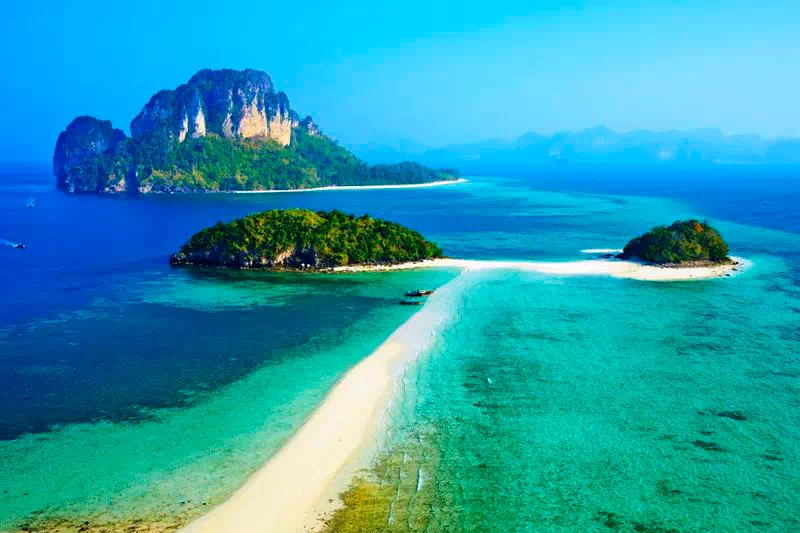
One planning tip: the James Bond Island tour from Krabi also visits this same temple. If you are booking both, you will see it twice, which is no disaster, but it is better to know now and to put a few days between the two trips.
Most healthy adults and children aged 4 and up can join. Children under 4, pregnant women and people with heart or other serious medical conditions are not allowed on this tour.
The price is ฿1790 for adults and ฿1490 for children aged 4-11, with hotel transfer, life jacket, guide, accident insurance, lunch, fruit and soft drinks included. Free transfer covers Ao Nang, Krabi Town, Ao Nam Mao, Klong Muang and Tubkaek Beach.
Here is my view on who will enjoy it and who will not:
The tour lists no swimming requirement, and you wear a life jacket throughout. Even so, someone who panics in water should mention it to the guide at the briefing, so they know to keep an eye on you.
All of the details, including the booking request, are on the white water rafting tour page. This is the tour for active people who want one full day away from the sea, with something different at every stop:
Yes, it is one of the best, as rain tends to improve the river rather than spoil the trip. You are going to get wet anyway, so a shower during the day changes very little, whereas rough seas can seriously spoil a day on an island boat.
The Andaman coast gets its wet season roughly from May to October, though the weather varies from year to year and there are plenty of sunny mornings in between. This article on the best time to visit Krabi goes through it month by month, including what happens to sea conditions.
In the dry season the tour still runs, and the day is still a good one because of the jungle, the waterfall and the temple. Just expect a calmer river, and don't book it purely for adrenaline at that time of year.
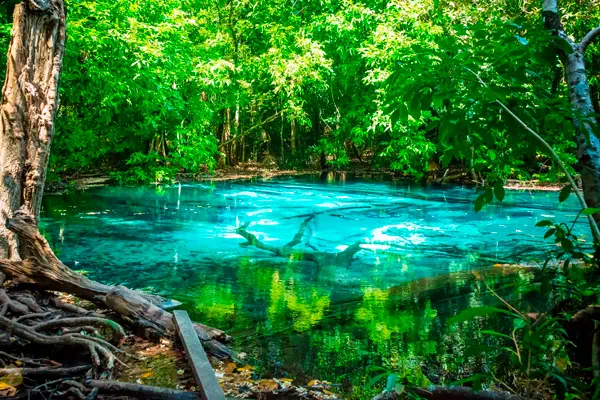
Rafting is not your only land-based option when the sea looks grey. The Emerald Pool and hot springs day (from ฿1390) is the softer choice, with warm water and no rapids, and it is better for grandparents and small children. Kayaking at Ban Bor Thor (from ฿1790) is quieter, with mangroves and sea caves, and it suits people who like to go at their own pace.
If rafting feels like too much, those two tours are the ones I would look at next, the first for a gentle jungle day and the second for quiet paddling:
Wear a swimsuit under quick-drying clothes, and shoes that stay on your feet. Non-slip footwear is the one thing not to get wrong, since cheap flip-flops tend to vanish in the first rapid and you still have a jungle walk later.
The tour's own list is short and sensible:
I would add a few things of my own. Put a cord on your glasses if you need them to see, since the river takes things and does not give them back. Use water-resistant sunscreen, because the sun still reaches you through thin cloud and you will not notice until the evening.
Leave jewellery and anything valuable at your hotel. A safe is listed among the inclusions, so ask at the base camp about using it for your wallet and phone. Unless your phone is in a properly waterproof case that you trust, it should not come onto the river.
Pack something light for your shoulders and knees for the temple, and keep it in your dry bag. Dry clothes feel wonderful on the drive home, and the others in the van will appreciate it as well.
Send a booking request from the tour page, or message us on WhatsApp, and you will receive your exact pick-up time after booking. The tour runs every day, and the itinerary may change with the weather or other circumstances.
A few practical things to sort out before the day:
On a wet-season trip, pick a day after some rain if your plans allow it, and leave the boat tours for the sunnier days. That one bit of flexibility is what turns grey weather into the best day of the holiday.
It is an adventure activity, so there is always some risk of bumps or a fall into the water. On this tour you wear a helmet and life jacket, get a training session first and have guides trained in swift water rescue at the front and rear of the raft. Follow their instructions and it is a safe, fun day for most people.
No experience is needed, as the training session covers what you have to know. A normal level of fitness is enough, and you can even skip paddling and hold on if you prefer. The jungle walk later in the day is more about being careful on wet ground than about strength.
The run itself is 5 km, and the time it takes depends on the water level and the group. It is only one part of a day that lasts about 9 hours. Most of the rest goes on the drive, lunch, the waterfall and the temple.
Only if you have a waterproof case that you really trust, and even then a capsized phone is gone for good. Bring a waterproof bag for the day and ask about the safe at the base camp. Most people are happier leaving their phone behind for the wet part.
Children must be at least 4 years old, and those aged 4-11 pay the child price of ฿1490. Whether a small child will actually enjoy it is another question, as the water is loud and fast in places. Be honest about your own child before booking.
No. The tour does not allow pregnant women or people with heart or other serious medical conditions to take part. A gentler jungle day may be a better fit, and it is worth asking your doctor about it first.
Rain alone is not usually a problem for a river trip, as you will be wet anyway and the river often benefits. The itinerary can change with weather conditions or other unforeseen circumstances, and those decisions are made on the day. Keep your dates a little flexible in the wet season.
Hotel pickup, insurance and a licensed local operator. Ask us anything on WhatsApp before you book.
Updated 19 November 2026.