whatsapp, telegram +66-957-269-990
- info@gokrabitours.com


A plain checklist for picking an elephant visit you will feel good about: what to look for, what should make you walk away, and an honest look at how the Krabi sanctuary half day fits.
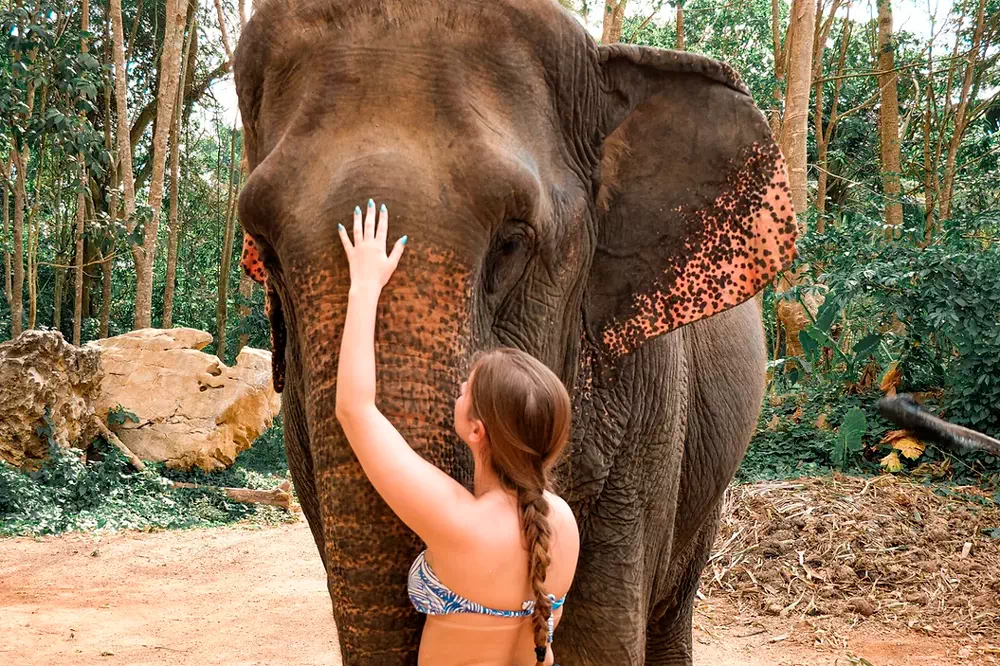
You are scrolling through elephant tours on your phone in a Krabi café, and every listing says "sanctuary", "rescue" and "ethical". Some of them still show tourists sitting on an elephant's neck. Learning how to choose an ethical elephant sanctuary in Thailand comes down to a few simple questions, and once you know them, the marketing words stop working on you.
I have lived around Krabi for years and have seen the elephant business change a lot. Riding camps that once lined the roads have rebranded, some genuinely, some only on the sign. Here is the checklist I give friends, and an honest look at the visit sold on this site.
Because anyone can use the word. "Sanctuary" is a marketing label in Thailand, not a protected standard, so a camp with riding and shows can call itself a sanctuary. You have to judge each place by what happens to the elephants, not by its name or its website colours.

Thailand has a long history of working elephants. They were used in logging until it was banned, and many then moved into tourism: rides, street begging, circus style shows. Most elephants in tourism today were born in captivity or come from that past, and they cannot simply be released into the wild.
That is the honest starting point. Almost every elephant you will meet in Thailand lives in captivity, and the real question is how it lives. Good places give elephants space, food, rest, social time and medical care. Bad places treat them as rides and props.
In between there is a big grey zone, and that is where most of the confusion sits. Many places have dropped riding but still keep elephants working long hours with visitors. That is better than riding, but it is not the same as a place built around the animals' needs.
Reviews help, but read them carefully. A hundred five-star reviews praising "amazing photos" tell you little about welfare. Look instead for reviews that mention how elephants were treated, how big the group was and whether staff answered questions. Those details are worth more than the star rating.
Use this list before you book anything. If a place fails the first three points, walk away, however good the reviews look.

No place near a tourist town scores a perfect ten, and that is fine. The goal is to choose the best option available to you and support the shift away from riding and shows.
The biggest red flag is any activity that puts the elephant to work for the visitor's entertainment. Riding, tricks and painting are the clearest warnings, but softer tricks in the wording can be just as telling. Here is what to watch for.
First, "ethical riding" or "bareback riding is kinder". It is not. Some camps market riding on the neck as natural because handlers do it, but tourist riding many times a day is a different thing.
Second, "rescued" with no details. Ask from where, when and why. A real rescue history usually includes specific facts, such as an elephant that worked in logging, trekking or street begging. A vague "we rescued them all" is a reason to dig deeper.
Third, packed schedules. If a place runs groups every hour from morning to evening, every day, the elephants are working. Look at how many sessions are offered and how big the groups are.
Fourth, photos that look like playtime but are staged. Elephants posing with trunks raised or "kissing" tourists are often trained behaviours. Natural behaviour looks less dramatic: eating, walking, splashing on their own terms.
Finally, watch for baby elephants offered for cuddles, and for places that refuse to answer questions. Honest places are proud to explain how they work.
A quick test I use: imagine the same activity with no tourists watching. Would the elephant still be doing it? Eating, bathing and wandering, yes. Standing on a stool or holding a brush, never. If the answer is no, the activity exists for the visitor, not the animal.
This is the honest grey zone. Many welfare experts now say the gold standard is observation only, where visitors watch elephants from a distance and do not touch or bathe with them. Others accept short, supervised bathing and feeding as a reasonable step up from riding, as long as elephants are not forced into it.
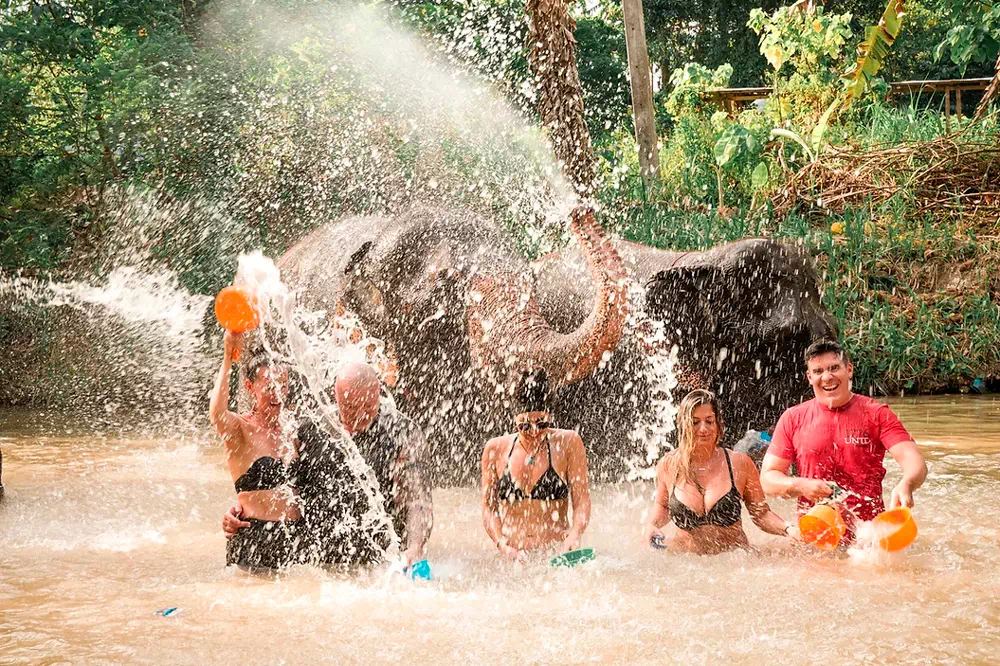
Elephants do love water and mud. In the wild they bathe and cover themselves in mud to cool down and protect their skin. A short swim on a hot day can be a genuine pleasure for them. The concern is when bathing becomes a performance repeated many times a day for each new group.
My own view: hands-on visits with feeding and a bath are a fair choice for most travellers, especially families, if the place has no riding or shows, keeps groups small and lets elephants walk away. If you want the strictest standard, look for observation-only programmes and accept that you will not touch the animals.
Either way, watch the elephants' body language. Relaxed elephants flap their ears gently, eat, and move freely. Stress shows as swaying, head bobbing or constant rocking, and those are signs to raise with staff or report afterwards.
The Krabi Ao Nang Elephant Sanctuary half day tour is a hands-on visit, not observation only. The programme is built around preparing food, feeding, mud baths and showering with the elephants, and riding is not part of it. It lasts about 3 hours and starts from ฿2490.

Here is how the visit runs, according to the tour page. A minivan picks you up at your hotel, and the drive to the sanctuary takes around 30 minutes. A guide meets you, explains how to approach the elephants, and leads the visit. You help make protein balls for the elephants, feed them, and then join them for a mud bath and a shower.
The sanctuary describes its aim as caring for elephants and raising awareness that they should not be used for entertainment. Part of what you pay supports their care. That is the honest summary of what the tour page says, and I would not claim more than that.
How it scores on the checklist, without exaggeration:
| Checklist point | Krabi sanctuary half day |
|---|---|
| No riding | Riding is not in the programme |
| No shows or painting | Not in the programme; activities are food prep, feeding and bathing |
| Education | A guide leads the visit and explains how to behave around elephants |
| Hands-on contact | Yes: feeding, mud bath and shower, so not observation only |
| Length and price | About 3 hours, from ฿2490 |
| Included | Hotel transfer, accident insurance, English speaking guide, fresh fruit, soft drinks, coffee and tea |
| Group size, vet care, backstories | Ask the guide on the day; good places answer openly |
If you want a deeper look at what the morning feels like, read the earlier article on the ethical elephant sanctuary in Krabi with no riding. It walks through the visit step by step.
Use the visit itself as your final check. Polite questions are welcome at any decent place, and the way staff answer tells you a lot. You do not need to interrogate anyone, just be curious.
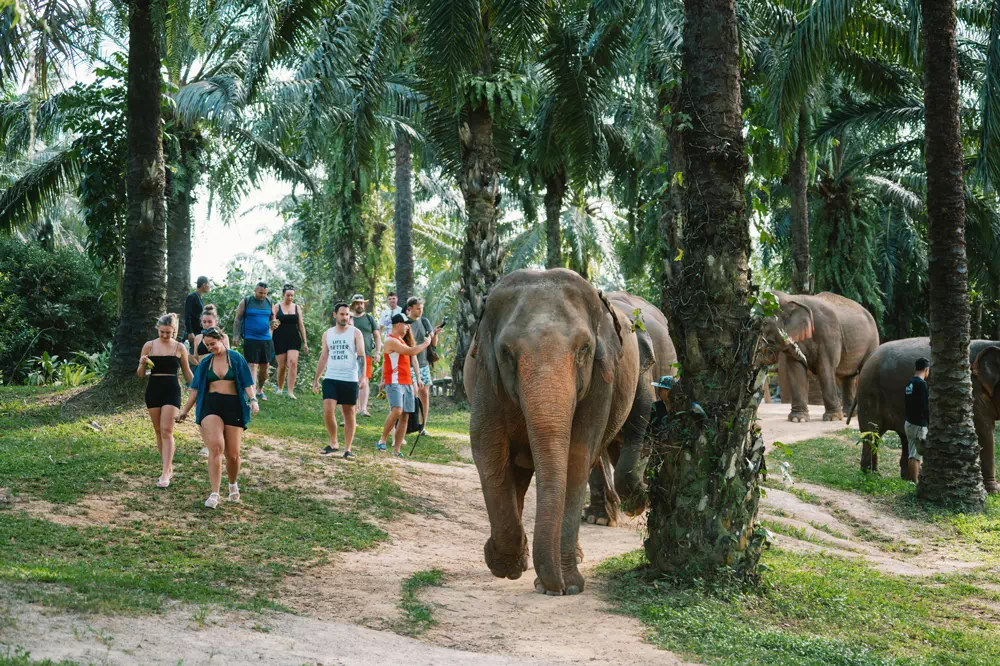
Good questions to ask the guide:
Watch the details as well. Are elephants free to move away from the group? Do handlers guide them with voice and food, or with force? Is the food fresh and plentiful? Are the shelters shaded?
Your behaviour matters too. Do not grab trunks or ears for photos, do not chase an elephant that walks off, and follow the guide's instructions. If something bothers you, mention it calmly to the guide, and leave honest feedback afterwards. That feedback is what pushes the industry in the right direction.
The Krabi half day suits most travellers who want close contact with elephants without riding. Families, couples and first-time visitors usually get the most out of it, because it is short, hands-on and close to Ao Nang.
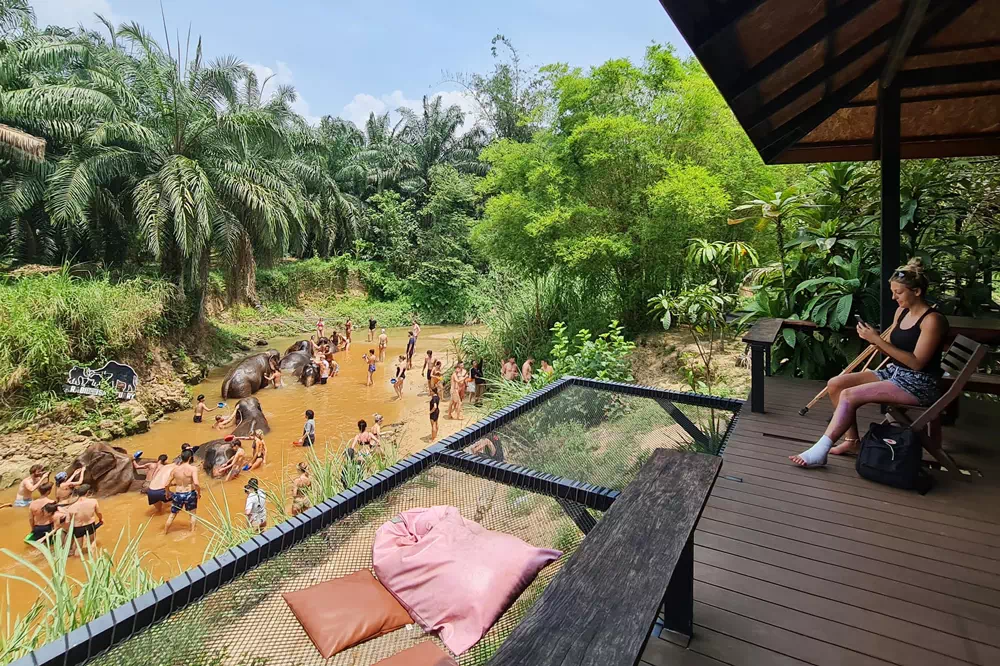
It also fits well into a busy week. At about 3 hours, it leaves the rest of the day free for the beach or a lazy lunch. Children usually love preparing food and splashing water, and the guide keeps things calm and safe.
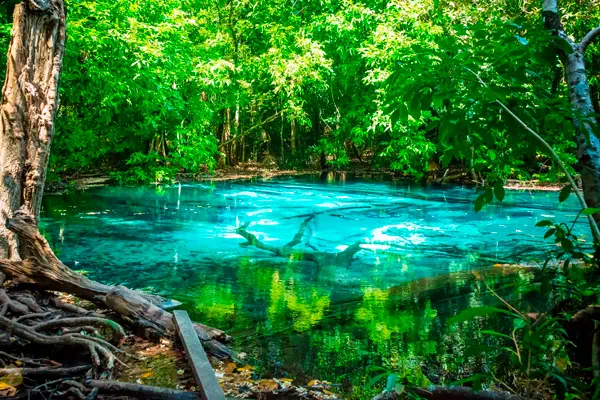
Who should choose something else: travellers who want strict observation-only contact, and people who do not want to get wet and muddy. If that is you, skip the bath or look for a different kind of day. A jungle trip to the Emerald Pool and hot springs, for example, gives you nature without animal contact.
The sanctuary half day suits families and anyone after close, riding-free contact, while the jungle day suits people who prefer to keep their distance from animals.
Pack for mud and water. The tour page asks you to bring your passport for the accident insurance, along with a towel, mosquito repellent, swimsuit, a change of clothes and sunscreen.
A few extra tips from experience: wear old clothes for the bath, keep your phone in a zip bag, and leave jewellery at the hotel. Sandals with straps are easier than flip flops in the mud.
Booking is simple. Send the booking request on the tour page or a WhatsApp message, and the exact pickup time arrives after confirmation. You can also browse all tours from Krabi if you want to plan the rest of your week around the visit.
No. Bareback or neck riding is still riding, and it often relies on the same training methods. A genuinely ethical place does not offer riding in any form.
Wild elephants live in some national parks in Thailand, but you are very unlikely to see them on a normal holiday in Krabi. The elephants you meet on tours are captive animals.
Yes, it is a popular family trip because it is short and hands-on. Children should stay close to an adult and follow the guide's instructions around the elephants. Check the tour page for child prices.
The whole tour lasts about 3 hours, and the drive from your hotel to the sanctuary takes around 30 minutes. The rest of the time is spent preparing food, feeding and bathing with the elephants.
Fruit is fine in moderation as part of a varied diet. Elephants eat mostly grass, leaves and bark, and good places make sure visitor treats are only a small part of what they get. Ask the guide what else the elephants eat.
Wear a swimsuit under old clothes that you do not mind staining. Bring a change of clothes and a towel, as the tour page recommends. Leave jewellery and valuables at the hotel.
Visitor money pays for food, care and space, which elephants in captivity depend on. Choosing places without riding and shows also sends a clear signal to the rest of the industry.
Hotel pickup, insurance and a licensed local operator. Ask us anything on WhatsApp before you book.
Updated 30 October 2026.