whatsapp, telegram +66-957-269-990
- info@gokrabitours.com


An honest guide to Wat Tham Sua: how tough the stairs really are, what is waiting at the top and at the bottom, how to handle the monkeys and the dress code, and when to climb to beat the heat.
It is not yet seven, the air is still almost cool, and a long concrete staircase disappears into the trees above you. Somewhere up there is a golden Buddha and one of the great views in southern Thailand. The climb at Tiger Cave Temple Krabi is short enough to do before breakfast and hard enough that you will remember every step of it.
Wat Tham Sua, as it is called in Thai, is a working Buddhist temple and forest monastery a short drive from Krabi Town. People come for the stairs, but there is a good deal more to it, and whether you enjoy your morning depends mostly on when you start.
It is hard, mainly because of the heat and the steepness rather than the distance. The staircase is usually quoted at 1,237 steps, and most reasonably fit people need 30 to 60 minutes to reach the top, with several stops on the way.
This is not a gentle hill with a long, easy approach. The stairs are steep from early on, and some of the steps are tall and narrow, so you are lifting your whole body on each one. Your thighs will be shaking long before you are halfway, even if you run or go to the gym at home.
What makes people turn back is the humidity. Krabi's air is thick even in the morning, and you will be soaked within the first few minutes. Don't take that as a sign that something is wrong. It just happens here, and it is why water matters more than fitness.
There are places to stop, including landings and a few benches, and nobody is judging you. You will see people of all ages going up slowly, and the ones who go steadily often pass the ones who started fast. Take it in short stages, rest before you are exhausted, and drink a little each time.
Be honest with yourself about going down, too. The descent is hard on the knees, with tired legs and sweaty hands on the rail, and that is when people slip. People with heart trouble, bad knees or a fear of heights should think twice, and I would not take small children or anyone pregnant up here. The bottom of the temple is a perfectly good visit.
At the summit you find a large golden seated Buddha, a golden stupa and a view across the whole Krabi landscape. On a clear morning you can see limestone towers, green plains and the Andaman Sea in the distance, which is the reward for all of those steps.
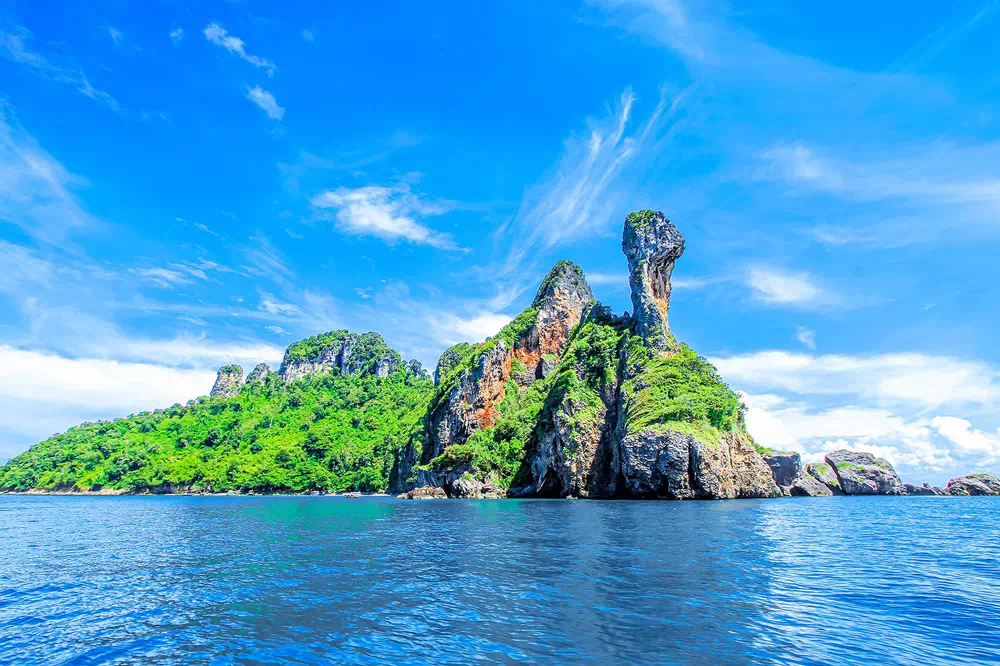
The summit is a place of worship first and a viewpoint second. You will usually be asked to take your shoes off in the shrine area, and the ground can be warm under bare feet when the sun is up. Keep your voice down and be polite with the camera, as there may be people here to pray.
Sunrise from up here is what many people come for, and it is lovely when the sky cooperates. But Krabi's horizon is often hazy, and I would not put too much weight on the perfect sunrise. The light an hour later is often just as good, and you will have far fewer phones in the way.
Give yourself time at the top. You have earned it, and your legs need the rest before going down. Sit in the shade, drink some water and wait for your pulse to come back to normal before you start the descent.
If the view is your only goal, there is a fair question to ask: is it worth it? For me, yes, once. It is one of those places where the effort is part of the point. But if you have only a few days in Krabi and hate stairs, you lose nothing by spending the morning on a boat instead.
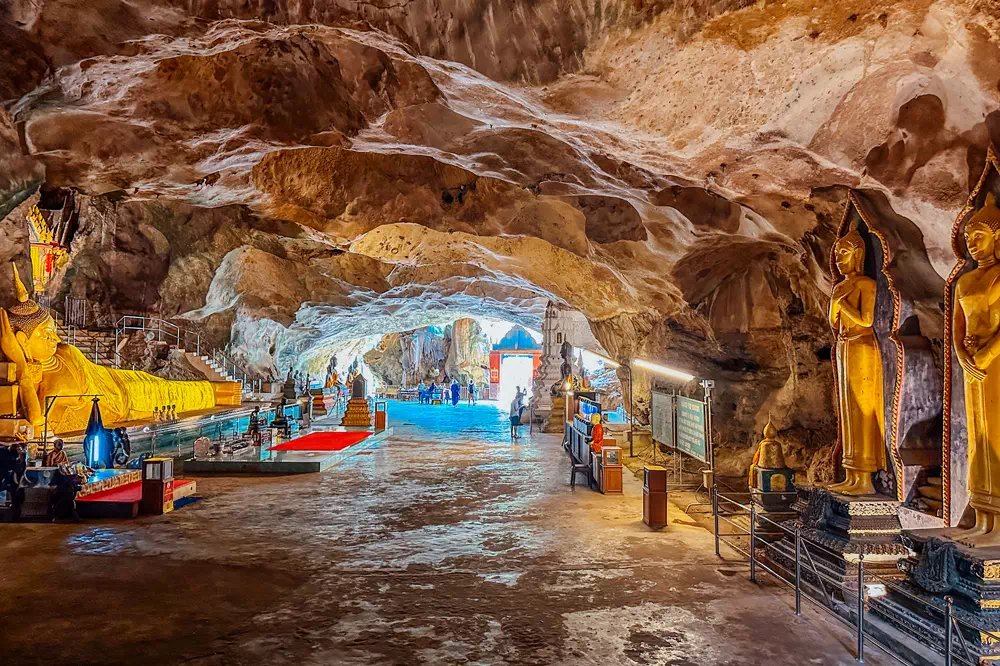
The lower temple is worth the visit even if you never climb a step. It has the cave shrine that gave the temple its name, with rock formations said to look like tiger paw prints, along with statues and tiger figures.
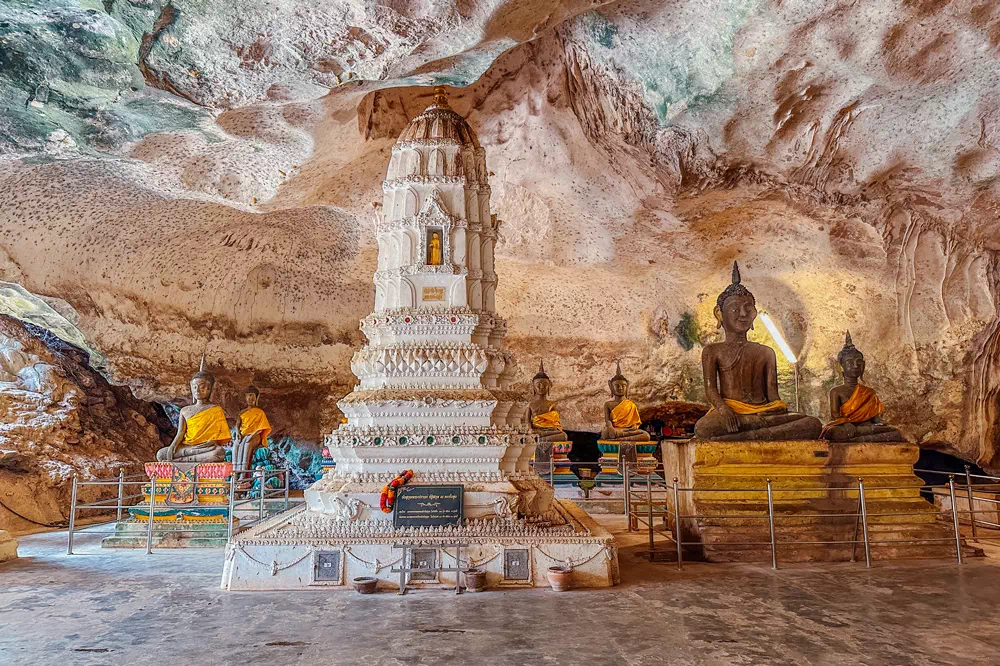
The story behind the name is that a tiger once lived in the cave, or that monks saw one here while meditating. Whichever version you hear, the cave is still a working place of prayer. It is smaller and more humble than the grand temples of Bangkok, and I like it the better for that.
Around the main area you will also find other statues, shrines and stairs. There is a shorter staircase to a large Guan Yin statue, which gives you a smaller view for much less effort. It is a good compromise for someone who wants a bit of a climb without the full summit.
Behind the temple, a forest trail runs through a valley of tall old trees past monks' living quarters. This is the part most visitors miss, and it is the quiet side of the place, shady and green.
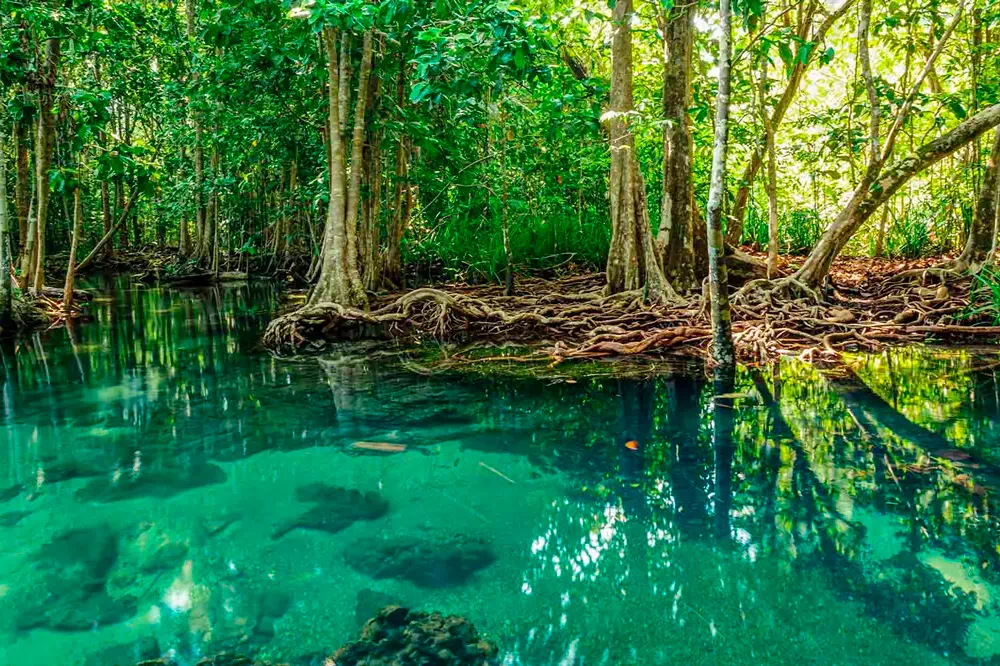
Stay on the path, keep your voice low and respect signs asking you not to go further, as this is where monks live and meditate. Allow time for this part. Many people run down the stairs, take one photo of the entrance and leave, and they miss what makes this a temple rather than a gym session. Even a short look around makes the morning feel like much more than exercise.
They are not usually dangerous, but they are bold and they will steal from you. Long-tailed macaques live around the temple and along the stairs, and anything that looks like food in your hand is an invitation.
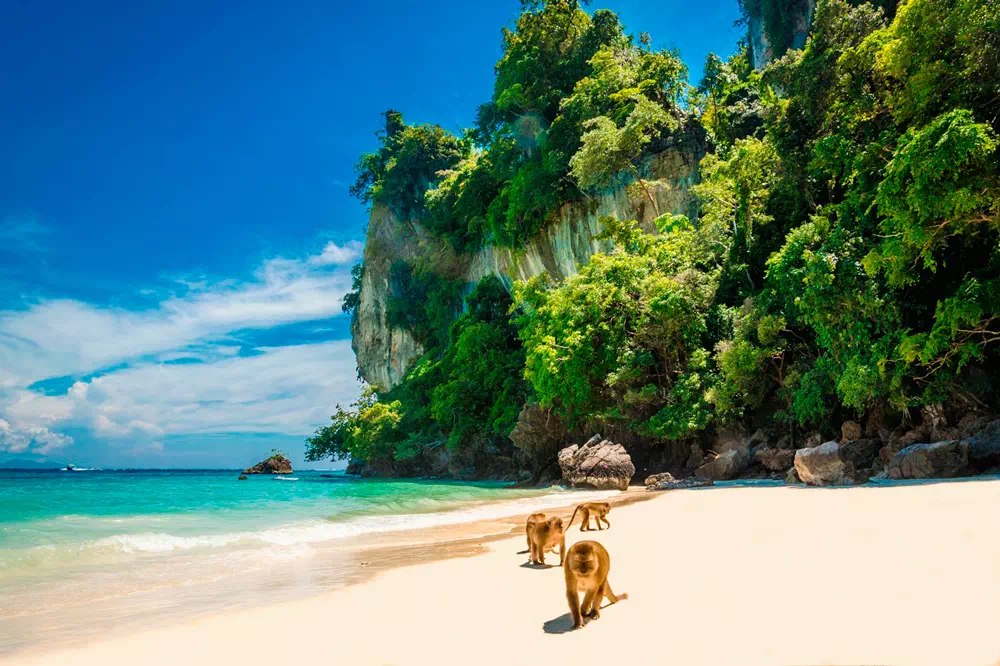
The rules are simple, and they work. Keep food and drink inside a zipped bag and don't eat on the stairs. Don't feed them, even if other visitors do, as it just teaches them to expect it. Hold on to your water bottle, your sunglasses and your phone, because anything loose can be grabbed.
Never stare a monkey in the face, show your teeth or try to pull something back if one has grabbed it. Let it go. A pair of sunglasses is cheaper than a bite, and a bite means a trip to a doctor and possibly rabies shots, so see a doctor promptly if you do get scratched or bitten.
Mothers with babies are the ones to give the widest space. Walk past calmly, without running, and keep small children close. Most of the time the monkeys are busy with each other, and you will get some good photos if you keep your distance.
This is a real temple, so cover your shoulders and knees. Light, loose clothes that dry fast are the right answer, as you will be soaked by the time you reach the top. Sports shorts that reach the knee and a T-shirt are fine for most people.
Skip the beachwear and tiny shorts, and carry a light sarong if you want to climb in less and cover up at the shrines. Cover-ups may be available at the entrance, but don't count on it. Take off your shoes where you see others doing so, and don't point your feet at a Buddha image when you sit down.
Shoes matter more than you might think. Trainers or sturdy sandals with a back strap are good, and flip-flops are a poor idea on a long staircase. Here is what I would carry:
Leave drones, big bags and heavy camera gear behind. Every extra thing is another thing to carry up all those steps, and most phones take a good enough picture of the view.
The best time is as early as you can manage, ideally starting around dawn. Being off the stairs before the late-morning heat makes the biggest difference of anything in this guide. Here is how the day usually plays out, though it is worth checking opening times locally, as they can change:
| When you start | Heat on the stairs | Crowds | My opinion |
|---|---|---|---|
| Before sunrise | Coolest of the day | Some people, mostly quiet | Best choice if you can face the alarm; bring a torch |
| Early morning | Warm and humid | Light to moderate | Very good, and my pick for most people |
| Late morning to mid-afternoon | Harsh and tiring | Tour groups at the lower temple | Avoid for the summit; visit only the bottom |
| Late afternoon | Easing off | Lighter | Good second choice; leave time to get down before dark |
The late afternoon deserves a word of warning. The sunset is beautiful up there, but you then go down a steep staircase in fading light with tired legs. If you do it, take a torch and don't stay to the very last light.
The season counts too. The cooler, drier months around the turn of the year are the most pleasant, while the rainy months can make the steps slippery. If it has just rained or a storm is coming, I would stay at the bottom. Check this month-by-month guide to Krabi weather when you plan your trip.
Yes, because the temple sits inland, away from the beaches, like most of Krabi's jungle sights. The Emerald Pool, Hot Springs and Tiger Cave full-day tour, from ฿1390, is the simple way to combine them, with everything arranged in one day.
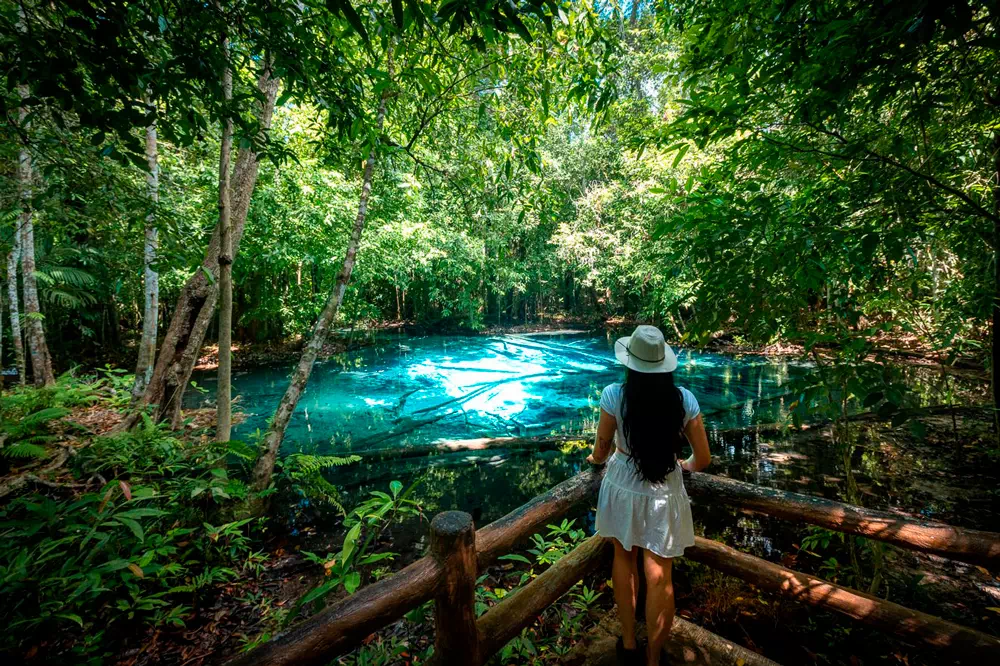
One honest point about that tour: a group day runs on a fixed schedule, so you won't be starting the temple at dawn. If climbing the full staircase is your main goal, ask when you book how much time is planned at the temple. If you are happy with the lower temple and a swim, it is an easy, good-value day. You can read more on the Emerald Pool, Hot Springs and Tiger Cave tour page.
The other option is to climb at dawn on your own and book an activity for later in the day or the next day. The Ao Nang elephant sanctuary half-day tour, from ฿2490, is 3 hours and easy on tired legs, and this article on the ethical elephant sanctuary in Krabi explains what you do there. Check the pickup time first, so that you are not rushing down the stairs.
I would not book anything too demanding straight after the summit. Your legs will be weak for the rest of the day, and probably sore tomorrow. Kayaking is a better follow-up than rafting, since you sit down and your legs get a rest. The kayaking tour suits people who like caves and quiet water, the jungle tour suits anyone who wants the temple and a swim in one easy day, and the sanctuary suits families.
To see what else runs from Krabi and Ao Nang, have a look at all the Krabi tours on the home page. To book, send a request on the tour page or write on WhatsApp, and the exact pickup time will be confirmed after booking.
Keep the morning simple and the climb becomes much more enjoyable. The one thing to get right is the start time, and the rest follows from that.
Then get something cold to drink and take the rest of the day easy. You have earned it, and tomorrow your legs will remind you of every step.
Entry to the temple has generally been free, with donation boxes for those who want to give something. This can change, so check on the day. A small donation is a nice gesture at a working monastery.
The easiest way is a taxi, a hired scooter if you are confident on one, or a tour that includes the temple. Local transport is not very convenient for a dawn start. If you take a taxi, ask the driver to wait or agree a pickup time, as it can be harder to find a ride back early in the morning.
There are basic facilities and drink sellers near the entrance area at the bottom. Don't expect much on the stairs, so use the toilet and buy your water before you start. Opening hours for stalls vary, especially at dawn.
Older kids who are active and used to walking can manage it with breaks, but the steps are tall for small legs. I would not take toddlers, as you would end up carrying them on steep stairs with monkeys around. Children of any age can enjoy the lower temple and the shorter walks.
It can be, as long as you go in a dry spell, and the air after rain can be beautifully clear. But wet steps are slippery, especially on the way down, and storms can roll in quickly. Skip the summit when it is raining and enjoy the lower temple instead.
Yes, in general, because visitors and monks share the temple grounds every day. Keep your voice down, don't walk in front of people who are praying, and don't take close-up photos of monks without asking. Women should also avoid touching monks or handing things directly to them.
Allow around half a day if you want to do the summit, look at the cave and walk a little in the forest. Fit people in a hurry can do the climb alone in much less time. If you skip the summit, an hour or so is enough for the lower temple.
Hotel pickup, insurance and a licensed local operator. Ask us anything on WhatsApp before you book.
Updated 14 November 2026.